On This Page ⌄
A finished automatic litter box is easy to photograph. The housing looks clean, the lid is closed, and the product is ready for a catalogue. But those photos leave an important question unanswered: what happens between the assembly bench and the shipping carton?
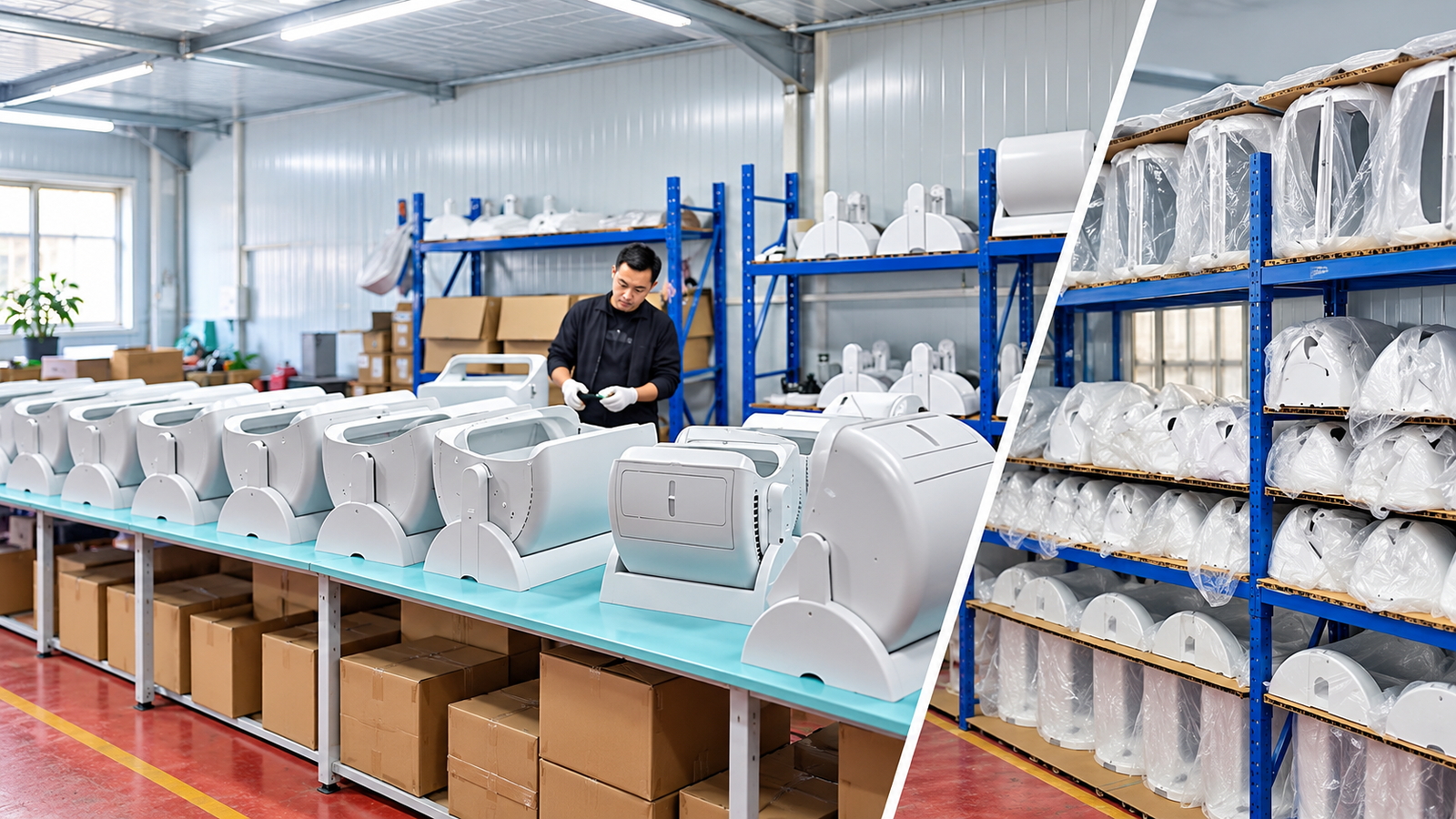
The four workshop and warehouse photographs accompanying this article offer a different view. We can see white housings lined up on tables, protected components stored on shelves, cartons being handled, and a larger storage area. These are useful glimpses of manufacturing and order preparation—not proof that any particular model has passed testing or that the scenes all belong to the same production batch.
For a pet brand comparing an automatic litter box manufacturer or sourcing partner, the real value is in understanding what should be verified before the products leave the factory.
What Should Buyers Verify Before an Automatic Litter Box Shipment?
Before approving a wholesale shipment, buyers should confirm the approved product configuration, assembly and functional checks, safety-related features, packaging contents, batch identification, and after-sales arrangements. For connected models, the agreed checks may also cover app pairing, firmware versions and recovery after a connection or power interruption.
The important part is evidence. A demonstration video or factory photo can start a conversation, but the buyer needs records that apply to the actual model and order, not an unrelated sample.
The Workbench: Where the Questions Begin
In the first photo, multiple white litter box bodies sit on a long worktable. A worker is nearby, and more components are visible on the shelving behind. The scene shows work in progress, but it does not reveal which units are being assembled, inspected or prepared for another step.
If I were discussing this stage with a supplier, I would ask them to walk through the assembly sequence for the exact model. Which components are installed first? At what point are the rotating chamber, waste drawer, housing panels and electrical connections checked? How are problems recorded when an item does not fit or operate as expected?
The answers matter because an automatic self-cleaning litter box combines mechanical and electronic systems. A small mismatch in a cover, moving part or connector may not be visible in the final product photographs, yet it can affect operation or maintenance.
For OEM projects, I would also ask which version of the approved sample the production line is following. That becomes especially important if a design has changed after the first sample.
Smart Litter Box Quality Control Is More Than a Power-On Test
A motor turning on does not, by itself, demonstrate that a smart litter box is ready for shipment. The appropriate quality checks depend on the model's design and advertised functions.
For example, a buyer may need to confirm how the product is designed to respond when a cat approaches or enters during a cleaning cycle, when a moving part encounters an obstruction, or when power is interrupted. If the model includes a weighing function, app control or Wi-Fi connectivity, those functions need their own acceptance criteria.
I would ask the supplier for three things: the test procedure, the pass/fail criteria, and records showing what was checked. Any safety-related testing should use the manufacturer's approved methods and relevant requirements for the intended market; it should not be improvised by an untrained buyer.
Just as important is the response to a failed check. Is the unit repaired and retested? Is the cause recorded? Are repeated problems reviewed before the batch is approved?
This is where automatic litter box quality control becomes a process rather than a marketing claim. The photos cannot verify these steps. The supplier's documentation and an agreed inspection plan are what make the process assessable.
What the Shelves Reveal—and What They Do Not
Another photo shows rows of white housings and other components, some wrapped for protection. The image suggests that parts are being stored or staged, but it cannot tell us how those parts are identified or matched to a particular product version.
For a self-cleaning litter box OEM order, I would want a clear record of the approved components. That may include the bill of materials (BOM), motor or sensor model, control board revision and applicable firmware version.
Why does that matter? Two units can look identical on the outside while using different internal parts. If a sensor or controller changes between production batches, the buyer should know whether compatibility, functions and any relevant compliance evidence are affected.
The practical question is not simply, "Do you have enough parts?" It is, "How do you make sure this order uses the parts we approved?"
Packing Is Part of Product Quality
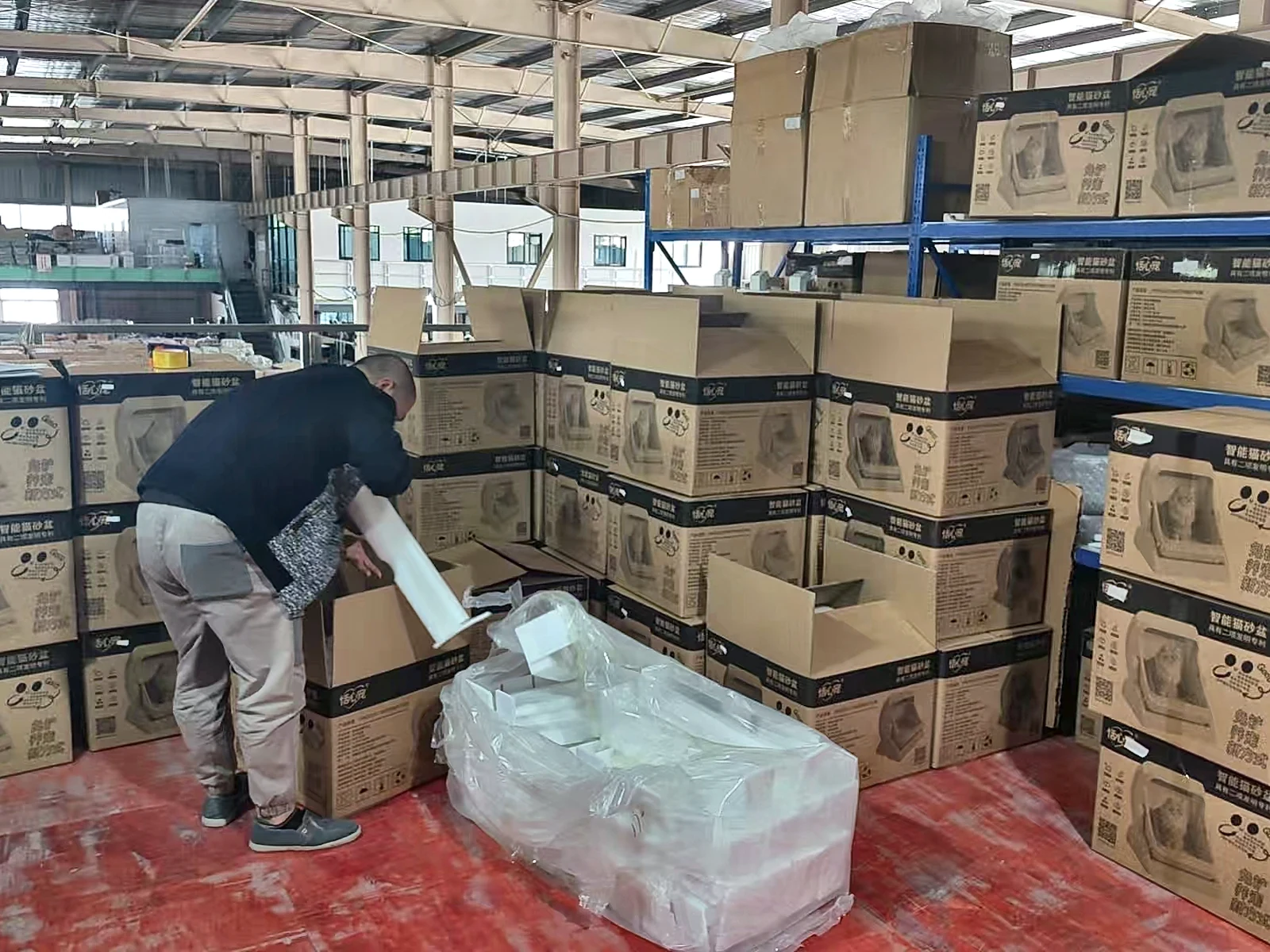
The photograph of the carton-handling area brings up another set of questions. Packaging is often treated as the final task, but a correctly assembled automatic litter box can still reach the customer with missing accessories or transport damage.
A packed sample should be reviewed before a bulk order is released. Depending on the model, the carton may need to contain the unit, a power supply, waste bags, a removable tray, a user manual and other agreed accessories. The actual packing list should be confirmed rather than assumed.
For private-label brands, the carton and manual also need to match the ordered version, destination market and approved artwork. If a package advertises app features, a safety function or a particular accessory, those claims should match the shipped configuration.
I would also ask how the product is protected inside the carton and what evidence supports the chosen packaging method. Where applicable, suppliers can provide package inspection records or transport-related test results. Stacked cartons alone cannot prove that protection is adequate.
A Large Warehouse Is Not the Same as Traceability
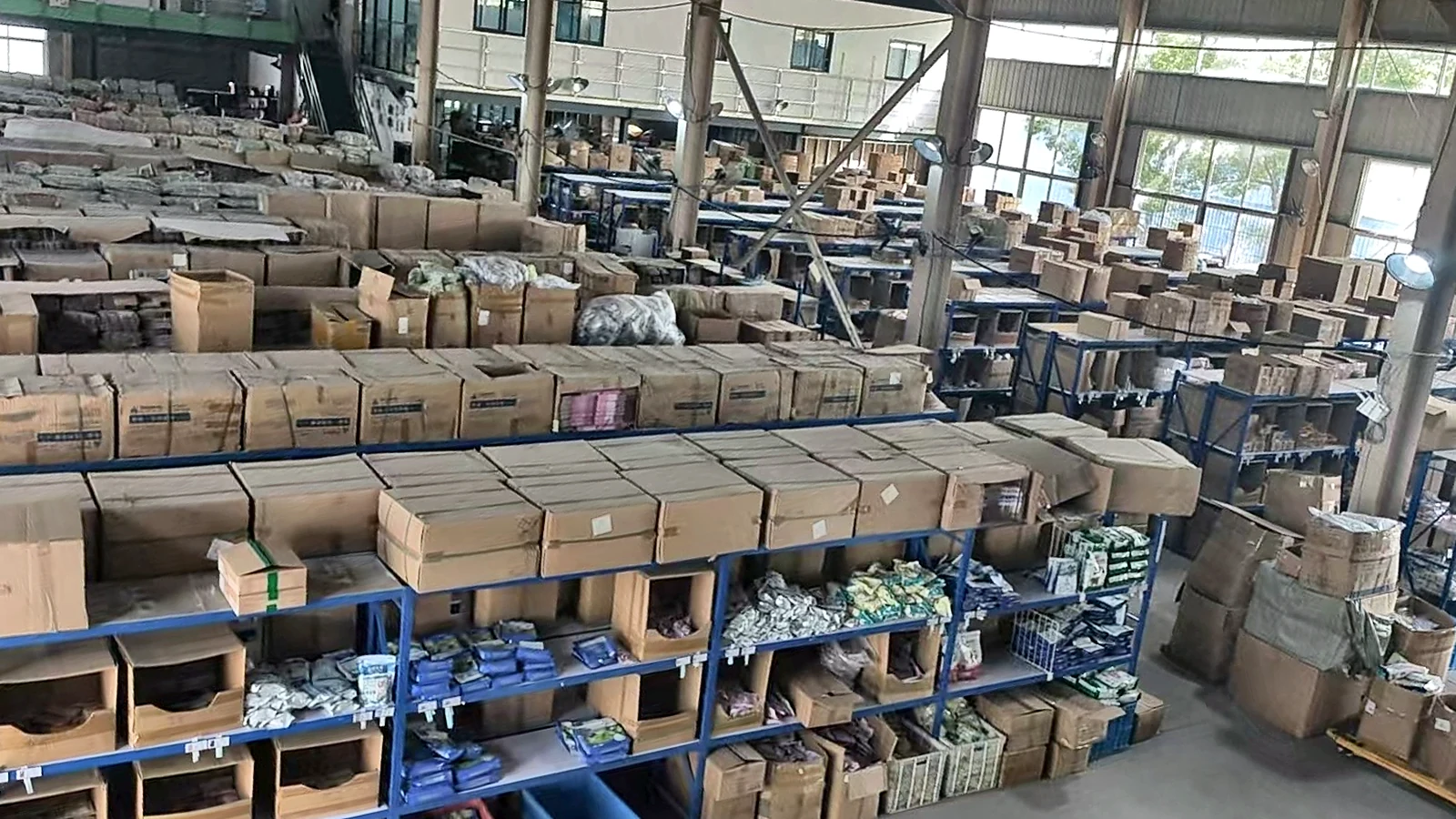
The wide-angle warehouse image shows shelving, inventory and many cartons. It is a useful picture of the surrounding logistics work, but it does not establish production capacity, current stock ownership or shipment accuracy.
For a distributor placing repeat orders, traceability is often more valuable than the size of a warehouse. Can the supplier connect a finished unit to its model, production batch and component version? Can it identify which batch was shipped to which customer?
Imagine that a retailer reports a recurring issue several months after delivery. Without batch and version information, the supplier and brand may struggle to determine which units are affected or which replacement part is compatible.
Traceability does not have to mean an expensive software system. A consistent batch code, production record and shipping record can already make follow-up much more effective.
A Practical Pre-Shipment Evidence Checklist for Pet Brands
When comparing automatic litter box wholesale suppliers, I would use the following checklist to structure the conversation. It lists what to request, not what these photographs claim has already been verified.
- Approved configuration: model number, signed-off sample or specification sheet, relevant BOM and software/firmware version where applicable.
- Assembly and function: documented checkpoints, inspection criteria and the procedure for handling units that fail a check.
- Safety-related features: model-specific test methods and available evidence for the functions being advertised, including applicable destination-market requirements.
- Packaging: confirmed accessory list, retail carton artwork, user manual, shipping carton details and available packaging verification.
- Batch identification: production or shipment identifiers that allow later investigation of a reported issue.
- After-sales support: warranty terms, troubleshooting instructions, spare-part list, compatibility information and the process for reporting defects.
Not every buyer needs the same set of documents, and not every model has the same features. The goal is to agree on a realistic set of checks before a dispute or a shipment problem occurs.
After-Sales Questions Belong in the Sourcing Discussion
The first customer complaint may arrive long after the cartons have left the factory. A sensor may need troubleshooting, a waste compartment may be damaged, or an app-connected model may require help with pairing or recovery.
That is why I would discuss replacement parts and technical support before confirming the initial order. Which components can be supplied separately? Are replacements compatible across model revisions? Who handles technical questions, and what information should a retailer collect when reporting an issue?
These are not minor details for a private-label pet brand. A product that is difficult to support can become expensive to manage even if the initial unit price is attractive.
What Factory Photos Can—and Cannot—Prove
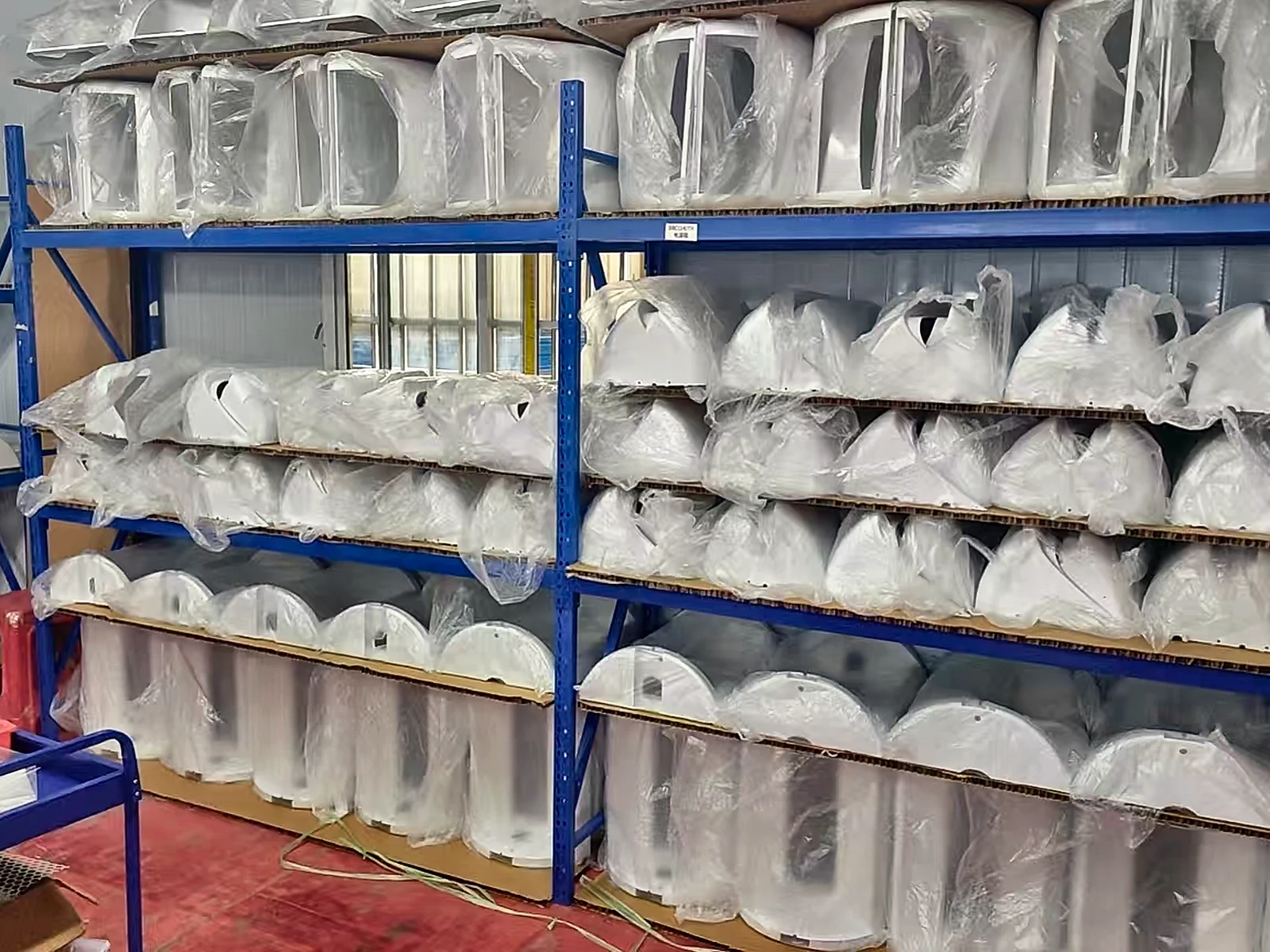
These four images are useful precisely because they show an environment that buyers rarely see in polished product catalogues. They help us ask more specific questions about automatic litter box manufacturing, component handling, packing and order preparation.
But a photo of a workbench is not a functional test report. A shelf full of parts is not a verified bill of materials. A packed carton is not proof of transit protection. And a busy warehouse does not establish a particular factory's output or quality rate.
For overseas buyers, the strongest approach is to combine visual references with an approved sample, written specifications, relevant records and clear communication before shipment.
At Zhanzheng Pets, we work with international pet brands, importers and distributors on pet product sourcing, OEM/ODM customization and coordination with manufacturing partners. We can help discuss product requirements and the information needed to evaluate potential supply options.
If you are planning an automatic litter box range, share your target market, required functions, estimated order quantity and packaging needs. The earlier these details are clear, the easier it is to identify the right questions for sampling, production and shipment.
Explore our Smart Litter Boxes Collection, read more sourcing insights, or contact Zhanzheng Pets to discuss your project.