On This Page ⌄
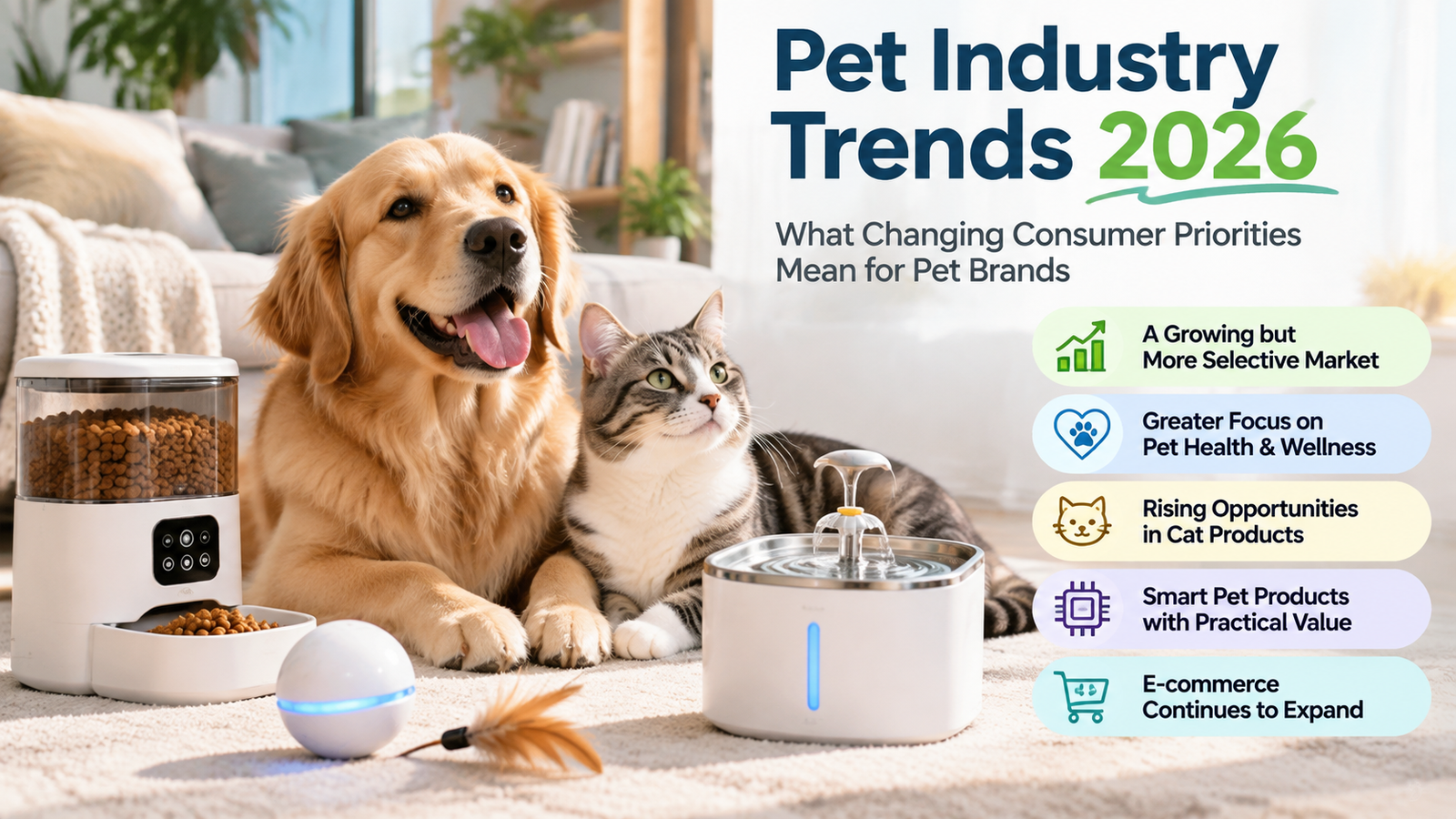
Pet industry trends 2026 point to a market where consumers are becoming more selective about the products they buy. Pet owners are paying closer attention to their animals' health, comfort and everyday wellbeing, while also looking for practical value and convenience.
For pet brands, importers and distributors, these changing priorities can influence product development, sourcing decisions and retail strategies.
Industry data suggests that the pet market continues to grow, but opportunities are not evenly distributed across all categories. From pet wellness and interactive enrichment to smart technology and e-commerce, several developments deserve closer attention.
Here are five trends worth watching in 2026.
1. The Pet Market Is Growing, but Consumers Are More Selective
According to the American Pet Products Association (APPA), US pet industry expenditures reached \$158 billion in 2025, representing 3.7% growth. The association projects the market will reach \$165 billion in 2026.
However, market growth does not mean every product category is performing equally well.
Consumers are becoming more careful about how they spend. Many continue to prioritize their pets, but they also compare prices, evaluate product quality and reconsider purchases that do not offer enough practical value.
For pet retailers and brands, this creates an important challenge: offering products that justify their price.
A product does not necessarily need more features or a higher price to stand out. Useful design, reliable performance and a clear purpose can be just as important.

2. Pet Health and Everyday Wellness Are Becoming More Important
Pet wellness is becoming a broader part of everyday pet care.
Beyond food and veterinary services, consumers are paying more attention to grooming, hygiene, comfort, activity and general wellbeing.
This shift is influencing how pet products are developed and presented.
For example, grooming products are increasingly positioned around easier home maintenance. Interactive toys are designed to encourage activity and engagement. Everyday care products are expected to be convenient and easy to maintain.
For brands, the opportunity is to understand the specific problem behind each purchase rather than simply following popular product claims.
Clear product information and realistic benefits are especially important in a market where consumers have more choices than ever.
3. Cat Products and Interactive Enrichment Are Gaining Attention
Cat ownership is another important development in the pet market.
APPA reported that the number of US cat-owning households reached approximately 53 million in 2025, increasing by 5% year over year.
At the same time, interest in products that support indoor activity and mental stimulation is creating new opportunities.
NielsenIQ's 2026 pet retail analysis reported year-over-year growth of 27% in electronic toys and 15% in treat-dispensing toys.
These figures suggest that interactive pet products deserve attention from brands planning their next product collections.
For cat product retailers, opportunities extend beyond traditional toys. Enrichment products, scratching solutions, climbing furniture and interactive feeding accessories can all contribute to a more complete product assortment.
The important consideration is whether a product offers a meaningful experience for both pets and their owners.
4. Smart Pet Products Need to Offer More Than Technology
Smart pet products remain an interesting area of product development.
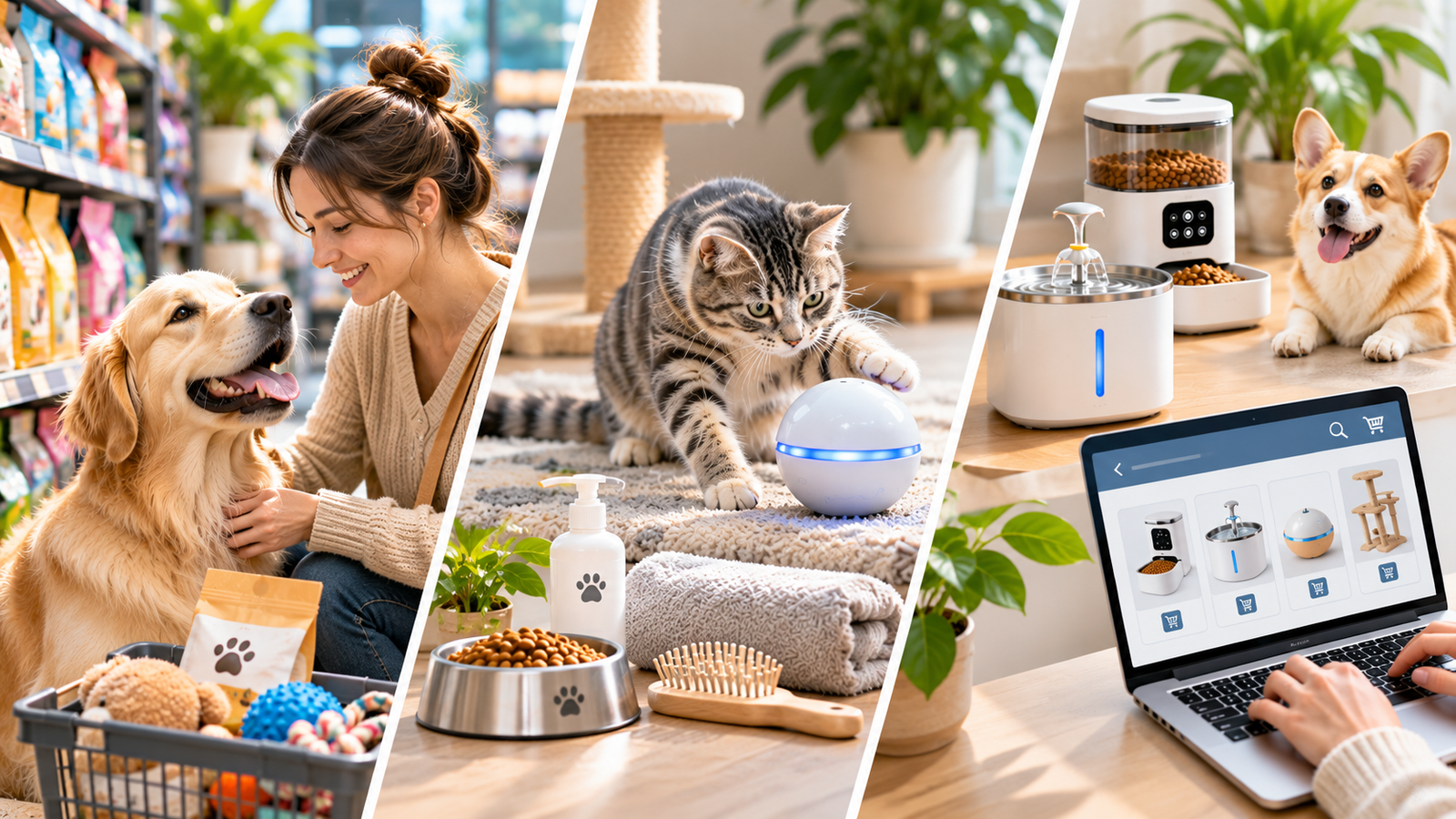
Automatic feeding, connected cameras, interactive toys and smart pet care devices can help owners manage everyday routines and stay connected with their pets.
However, adding Wi-Fi, an app or a camera does not automatically make a product more valuable.
NielsenIQ's 2026 retail analysis found that treat-dispensing cameras grew 32% year over year, while ordinary pet cameras declined.
This is an interesting signal: consumers may be looking for more interaction and practical functions rather than technology that only allows them to observe their pets.
For manufacturers and brands, the lesson is straightforward.
Technology should solve a real problem. Product reliability, ease of use, maintenance and after-sales support remain essential considerations.
A simpler product with a clear purpose may be more attractive to customers than a complicated device with features they rarely use.
5. Online Shopping Is Changing How Pet Products Compete
E-commerce continues to influence the pet retail market.
According to NielsenIQ, US pet care sales reached \$95.1 billion over the reported 12-month period, with online sales increasing 14.1% year over year. In-store sales declined 1.4% over the same period.
The same analysis found that nearly 70% of customers shopped both online and in physical stores.
For pet brands, this means product presentation matters across multiple channels.
A product needs more than an attractive physical appearance. Buyers also need clear product photography, informative descriptions, useful videos and packaging that communicates the product's benefits.
For distributors and retailers, products that are easy to explain and compare can also make assortment planning and online merchandising more effective.
This is particularly important for products with multiple configurations, accessories or technical features.
What These Pet Industry Trends Mean for Brands
The developments in 2026 point toward a more selective and competitive pet product market.
For brands, importers and distributors, several priorities deserve attention:
- Focus on real customer needs: Develop products that solve
practical problems rather than adding unnecessary features.
- Build a balanced product range: Consider different price levels,
customer groups and product functions.
- Pay attention to cat-related opportunities: Growing cat
ownership and interest in indoor enrichment deserve consideration.
- Evaluate smart product development carefully: Technology should
improve convenience or interaction without creating unnecessary complexity.
- Prepare for online competition: Invest in clear product images,
accurate specifications, packaging and useful product content.
Product selection is becoming more important than simply expanding the number of SKUs.
Brands that understand their customers and build a focused, well-positioned product range may be better prepared for changing market conditions.
Frequently Asked Questions
Is the pet industry still growing in 2026?
Yes. APPA projects US pet industry expenditures to reach \$165 billion in 2026, following \$158 billion in 2025. However, growth varies across product categories and consumer spending is becoming more selective.
What are the biggest pet product trends in 2026?
Important trends include pet wellness, interactive enrichment, growing interest in cat products, smart pet technology and the continued expansion of online pet retail.
Are smart pet products a good opportunity for pet brands?
They can be, particularly when technology solves a practical problem. Buyers should evaluate reliability, ease of use, maintenance requirements and after-sales support before introducing smart products.
What should pet brands consider when developing new products?
Brands should consider customer needs, target market, product differentiation, price positioning, quality, packaging and sourcing reliability.
Final Thoughts
The pet industry is not simply becoming larger. It is becoming more diverse, more competitive and more focused on customer expectations.
For pet brands, the next opportunity may not come from introducing more products, but from understanding which products genuinely matter to their customers.
At Zhanzheng Pets, we follow developments across the pet product market and support brands, importers and distributors with product sourcing, OEM/ODM and private-label discussions.
Interested in exploring new pet product opportunities? Let's discuss your next project.
Sources
- [APPA -- 2026 State of the Industry
Report](https://americanpetproducts.org/2026-state-of-the-industry)
- [NIQ -- Pet Retail Trends
2026](https://nielseniq.com/global/en/insights/analysis/2026/paws-for-thought-why-your-pet-aisle-is-bleeding-cash-to-the-internet/)
- [NIQ -- The Wellness-First Pet
Parent](https://nielseniq.com/global/en/insights/analysis/2026/the-wellness-first-pet-parent-how-preventive-care-is-reshaping-pet-health-and-how-ai-is-influencing-discovery/)