On This Page ⌄
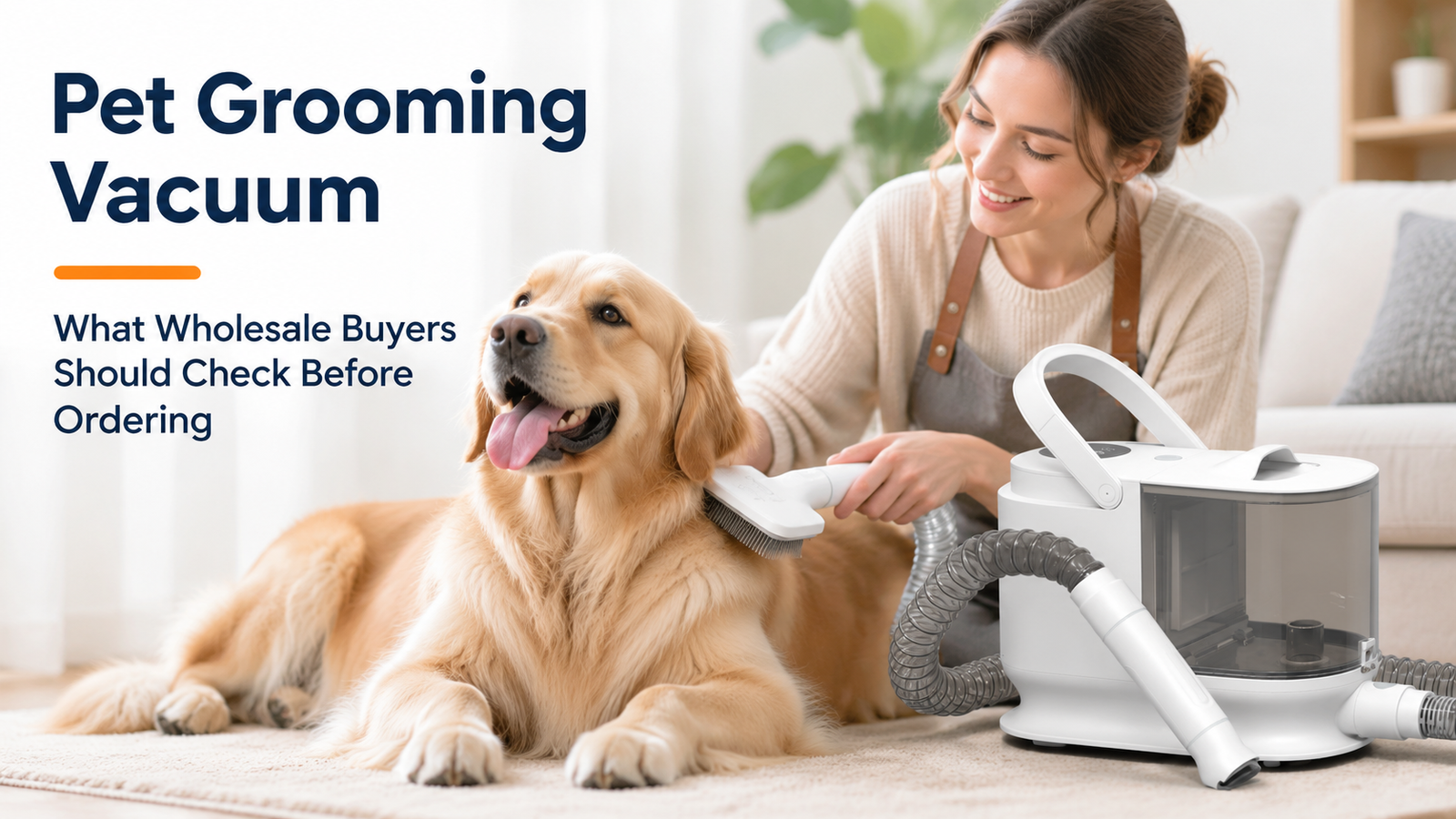
Choosing a pet grooming vacuum involves more than comparing prices. Two kits that look similar may contain different tools, packaging or electrical configurations. Those differences affect the customer experience and the cost of a bulk order. For brands, importers and retailers, the most useful starting point is a clear specification: define the intended customer, compare complete kits and review a representative sample before approving a supplier's quotation.
1. Understand the Complete Kit
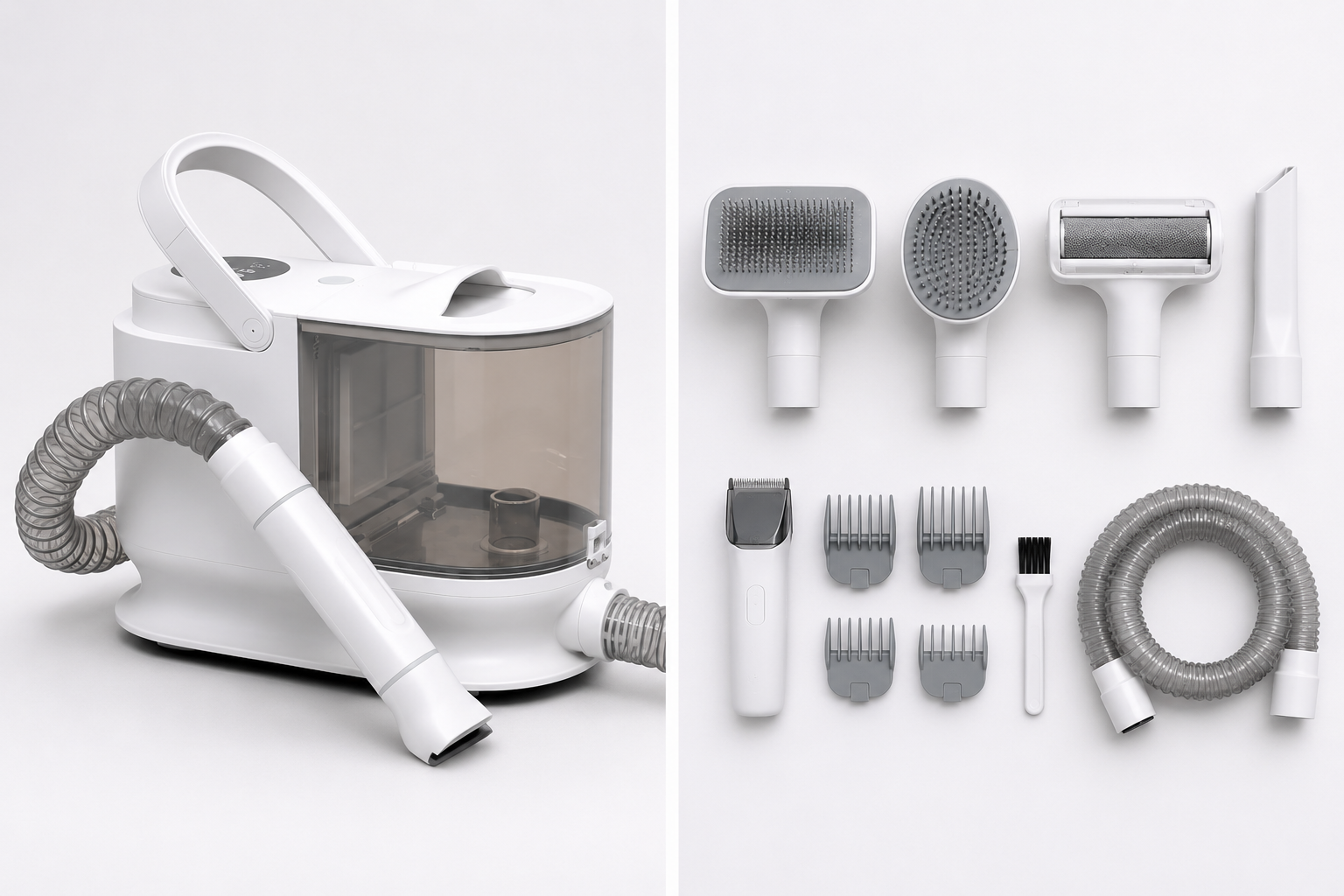
A pet grooming vacuum kit typically combines a vacuum unit, hose and grooming attachments. The exact contents depend on the model and order. A headline such as “6-in-1” may describe functions rather than the number of physical accessories in the box.
Request a packing list with the name, quantity and purpose of every item, including guide combs, cleaning tools, power accessories and instructions. Identify what is standard and what is optional. Compare that list with the product photos, sample and proposed retail packaging. A lower unit price may be attractive, but it is not a fair comparison if a quoted kit excludes tools your customer expects.
2. Compare Grooming Attachments
Start with how the kit will be used. A grooming brush, deshedding tool, clipper and cleaning nozzle serve different purposes; extra pieces are useful only if they support the intended product and can be explained clearly to customers.
Ask each supplier for photographs, attachment names and descriptions of intended use. Check whether clipper guides are included and how the tools connect to the hose or unit. For cleaning nozzles, confirm which surfaces and uses the instructions cover. Request a list of replaceable parts and ask whether each can be reordered for the selected model.
For example, the PET CARE S2 product page lists several grooming and cleaning attachments. Confirm the itemized set and quantities for your quotation, because an image showing optional tools is not proof that they are included.
3. Check Functions and Usability
A specification sheet can describe suction settings, but it cannot by itself show how easily a kit can be assembled or cleaned. Ask how users change settings, remove collected hair and access parts that need routine maintenance. Check the instructions for operating limits and cleaning methods.
When comparing suction claims, request the measurement method, setting and test conditions. A higher stated figure does not automatically establish better results in every use. Treat general descriptions such as “quiet” as marketing language unless a comparable noise measurement and its conditions are available.
Review the controls, hose reach and attachment changes on a sample. These everyday steps can affect whether the product is practical for its intended customer.
4. Consider Capacity, Size and Power
Capacity influences how much collected hair the container is designed to hold, while dimensions and weight affect shelf space, handling and shipping. Compare the whole unit and its packed dimensions; a product that fits a shelf may require a larger carton once the hose and accessories are included.
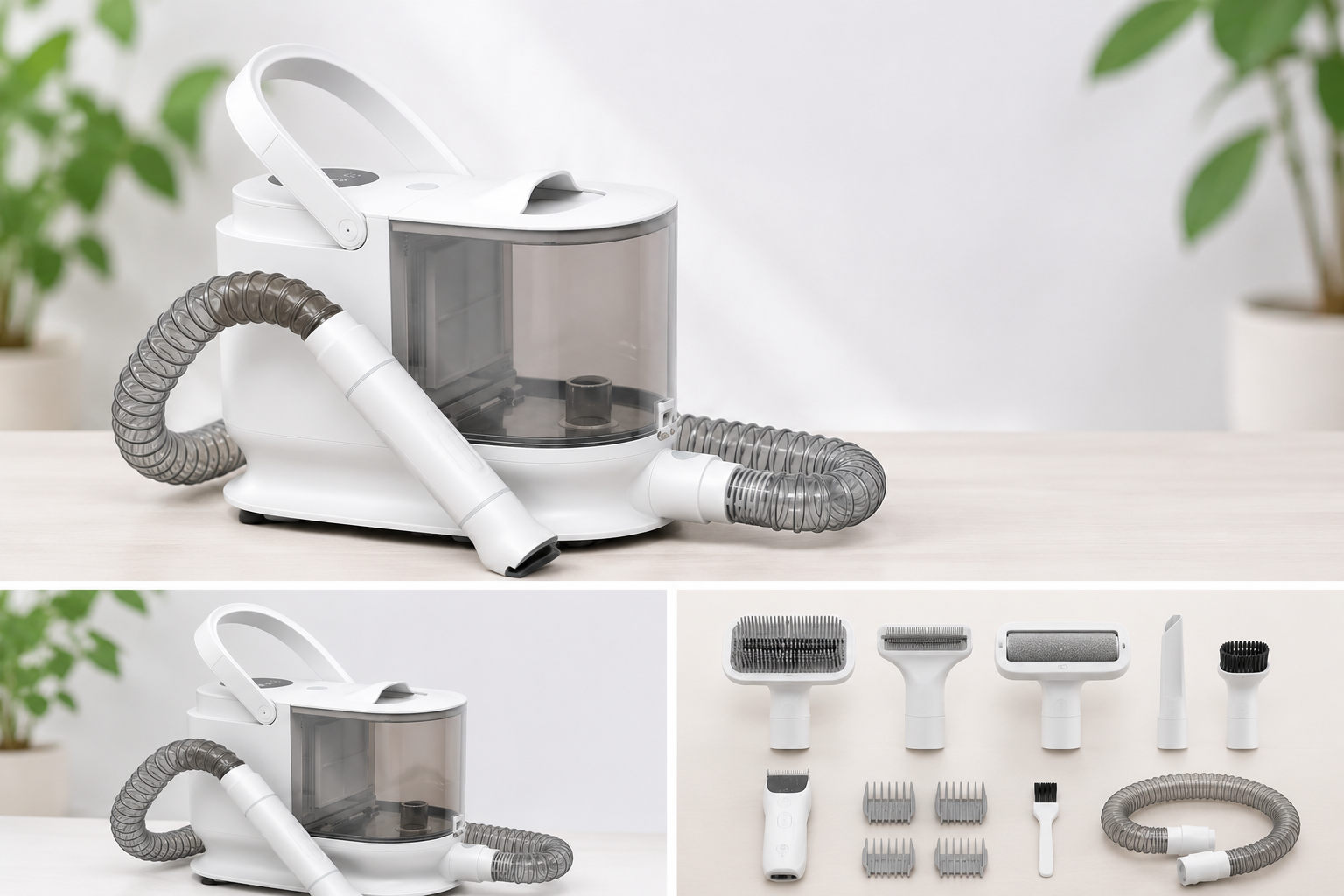
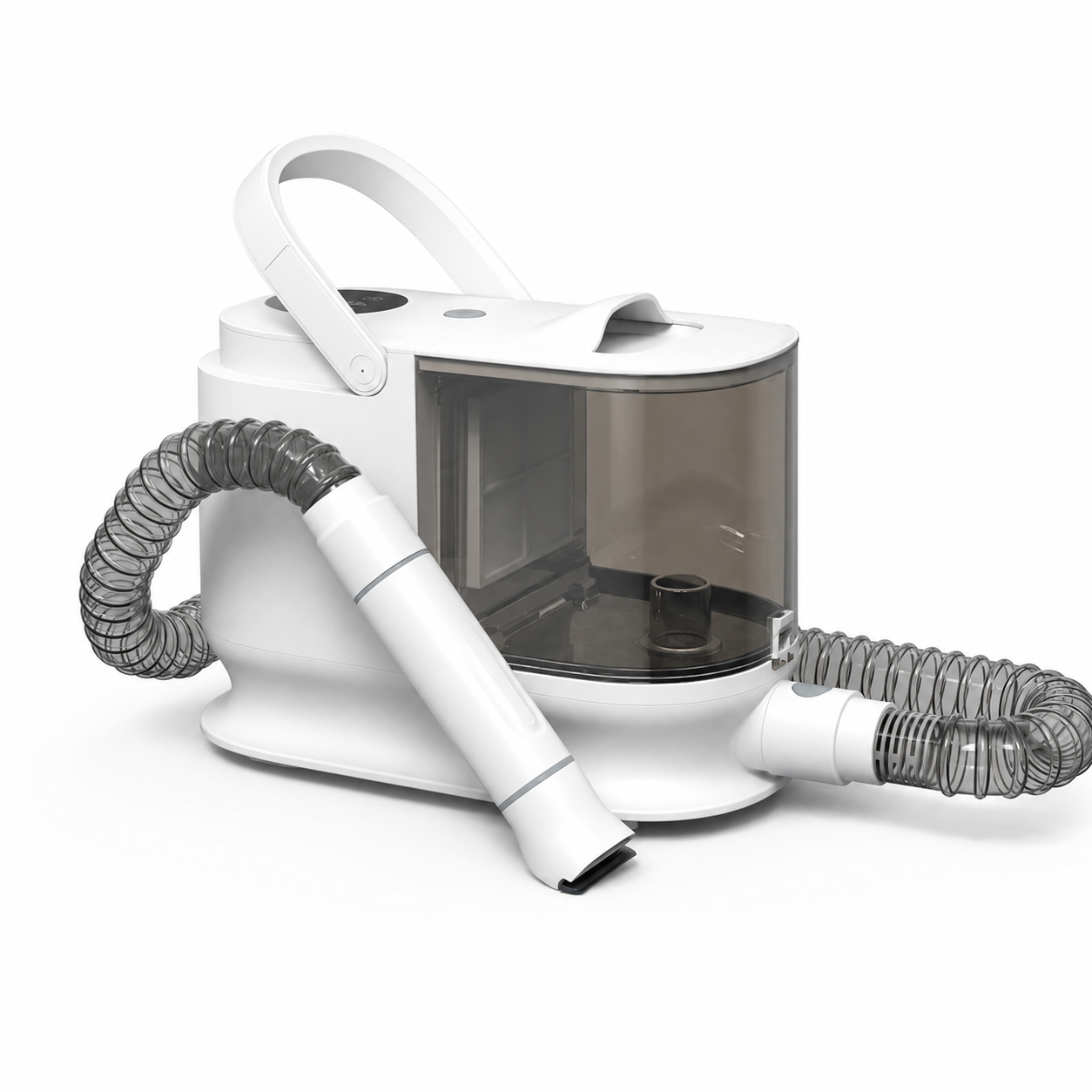
As one reference, the published PET CARE S2 specifications list a 2.5 L dust container and product dimensions of 323 × 168 × 264 mm. These numbers help define the product, but capacity alone does not determine whether it fits a buyer's assortment.
Confirm the voltage version and plug for the destination market. Request the final carton dimensions and gross weight for the exact configuration before estimating freight.
5. What to Check When Reviewing a Sample
A sample should represent the model, voltage, accessories and packaging you intend to purchase. Before opening it, record the model and configuration; then check the contents against the packing list. Note missing items or differences from the quotation.
Connect and remove each attachment, inspect its fit and review the instructions. Operate the controls as directed, then empty the container and check how routine cleaning and reassembly work. If comparing hair collection across samples, use the same reference material and procedure, record the setting and avoid treating an informal check as a laboratory test.
Inspect the voltage label, instruction language and packing protection. Record photographs, observations and requested changes. Before bulk production, agree which sample, accessory list, packaging artwork and inspection criteria will serve as the reference for the order.
6. Compare Supplier Quotations
Ask each pet grooming vacuum supplier to quote the same written requirements. Specify the model, voltage and plug, itemized accessories, packaging, quantity, delivery terms and destination. Otherwise, one quote may exclude a component or service included in another.
Request separate prices for optional accessories, branding and packaging changes. Confirm sample costs, minimum quantities, production timing and the conditions for repeat orders. Consider freight, import charges and local handling when comparing total cost, as applicable to your shipment.
Before ordering, confirm the approved specification, available product documentation, replacement-part arrangements and how defects are reported. Record responsibilities in the order documents. The lowest quoted unit price is only useful when the complete configuration and terms meet your needs.
Frequently Asked Questions
What should be included in a pet grooming vacuum kit?
Contents vary. A kit may include a vacuum unit, hose, grooming tools and cleaning attachments. Ask for an itemized list with quantities, and check it against the sample and final packaging.
How can buyers compare suction and noise claims?
Request the operating setting, measurement method and conditions for each claim. Use comparable sample checks for practical observations, and do not assume that a higher suction number or a “quiet” description proves a particular user experience.
What should buyers confirm before a bulk order?
Confirm the approved model, voltage, plug, accessory list, packaging and sample. Agree on the quotation, delivery terms, documentation, replacement-part arrangements and inspection criteria in writing before production.
Conclusion
A good buying decision starts with a consistent brief and a sample that represents the full kit. Compare the contents, usability and complete order terms rather than price alone. For a product reference, review the PET CARE S2 specifications and confirm the configuration for your project.