On This Page ⌄
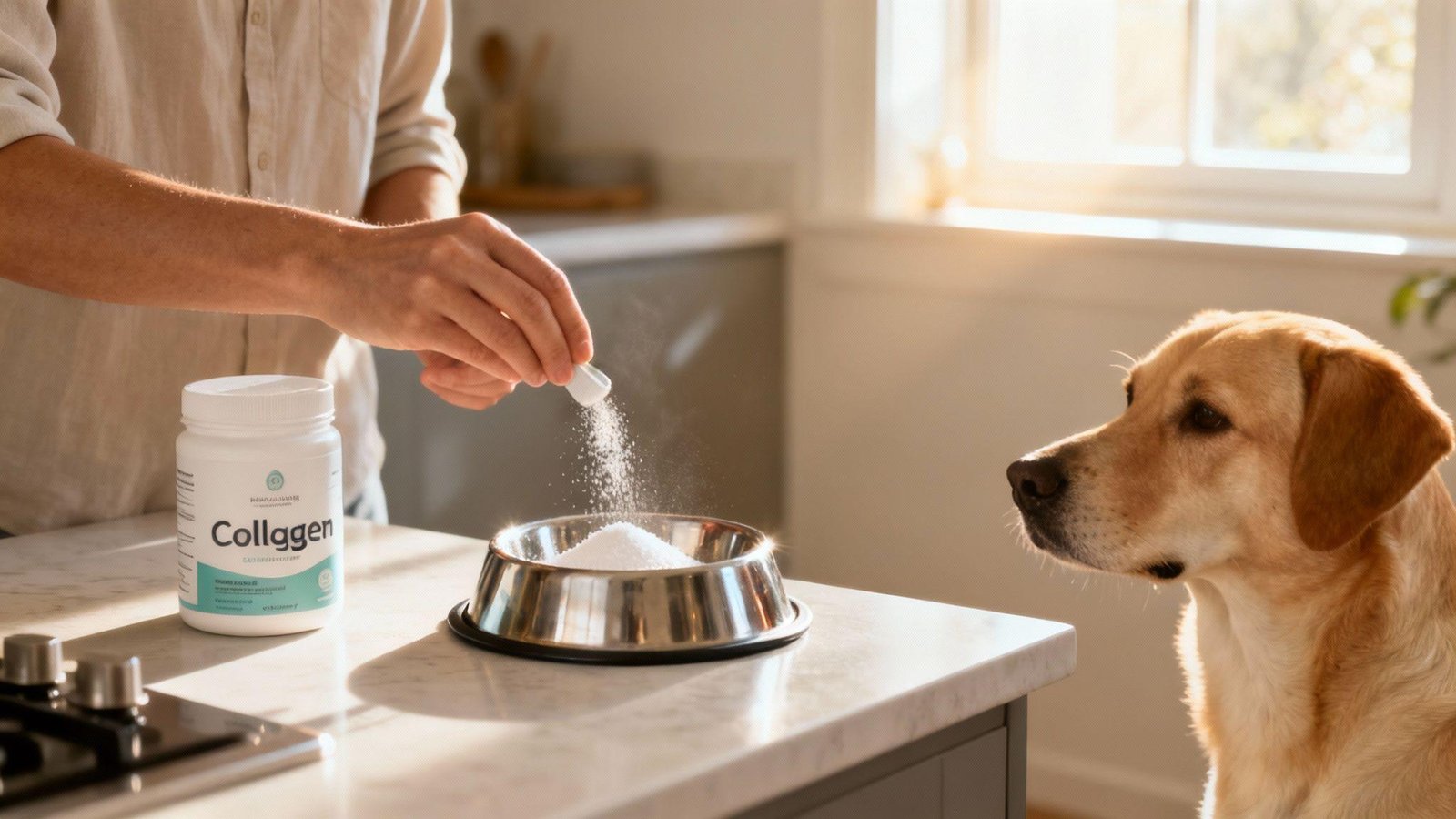
Collagen is becoming an increasingly visible ingredient in the pet supplement industry. As pet owners become more familiar with functional ingredients from human wellness products, pet brands are exploring how these ingredients can be developed into products for dogs.
The trend is attracting attention from supplement brands, private label businesses and pet product distributors. However, developing a collagen supplement involves more than selecting an ingredient and choosing a package. Ingredient specifications, formulation, product format, palatability, quality control and regulatory requirements all need to be considered before a product enters the market.
For brands considering a new product range, here are six important areas to understand.
1. Why Is Collagen for Dogs Gaining Attention?
Collagen is a structural protein found in connective tissues. In the pet supplement market, collagen-related ingredients are commonly associated with products positioned around joint, skin and coat care.
The growing interest is also connected to the wider human wellness industry, where collagen has become a familiar ingredient.
A November 2026 industry report covering 195 pet supplement brands found that 94 brands, or 48%, offered a collagen or connective-tissue ingredient product. Third-party trend estimates also recorded approximately 12,100 monthly US searches for "Collagen for Dogs" and 2,900 for "Collagen Sticks" in October 2026.
These figures suggest a commercial opportunity, but they do not prove that every collagen product offers the same benefits. For pet brands, the opportunity is to develop a clearly positioned product supported by appropriate ingredient information and reliable quality standards.
2. Understanding Different Collagen Ingredients
Not all collagen ingredients are identical. Their source, processing method and specifications can influence how they are used in a finished product.
Hydrolyzed Collagen Peptides: Hydrolyzed collagen is processed into smaller peptides. Its characteristics, including molecular weight distribution, solubility and protein content, should be reviewed when selecting a raw material.
Undenatured Type II Collagen (UC-II): Undenatured type II collagen is a different ingredient category with a different processing approach. It should not be treated as interchangeable with ordinary hydrolyzed collagen peptides.
When evaluating suppliers, brands should request information about animal source and raw material origin, collagen type and processing method, protein content and relevant specifications, ingredient testing and batch consistency, and storage conditions and shelf-life information.
A supplier should be able to explain exactly what is being supplied rather than relying on a general description such as "premium collagen."
3. Choosing the Right Product Format
The format influences how a supplement is presented, measured, stored and incorporated into a dog's daily routine.
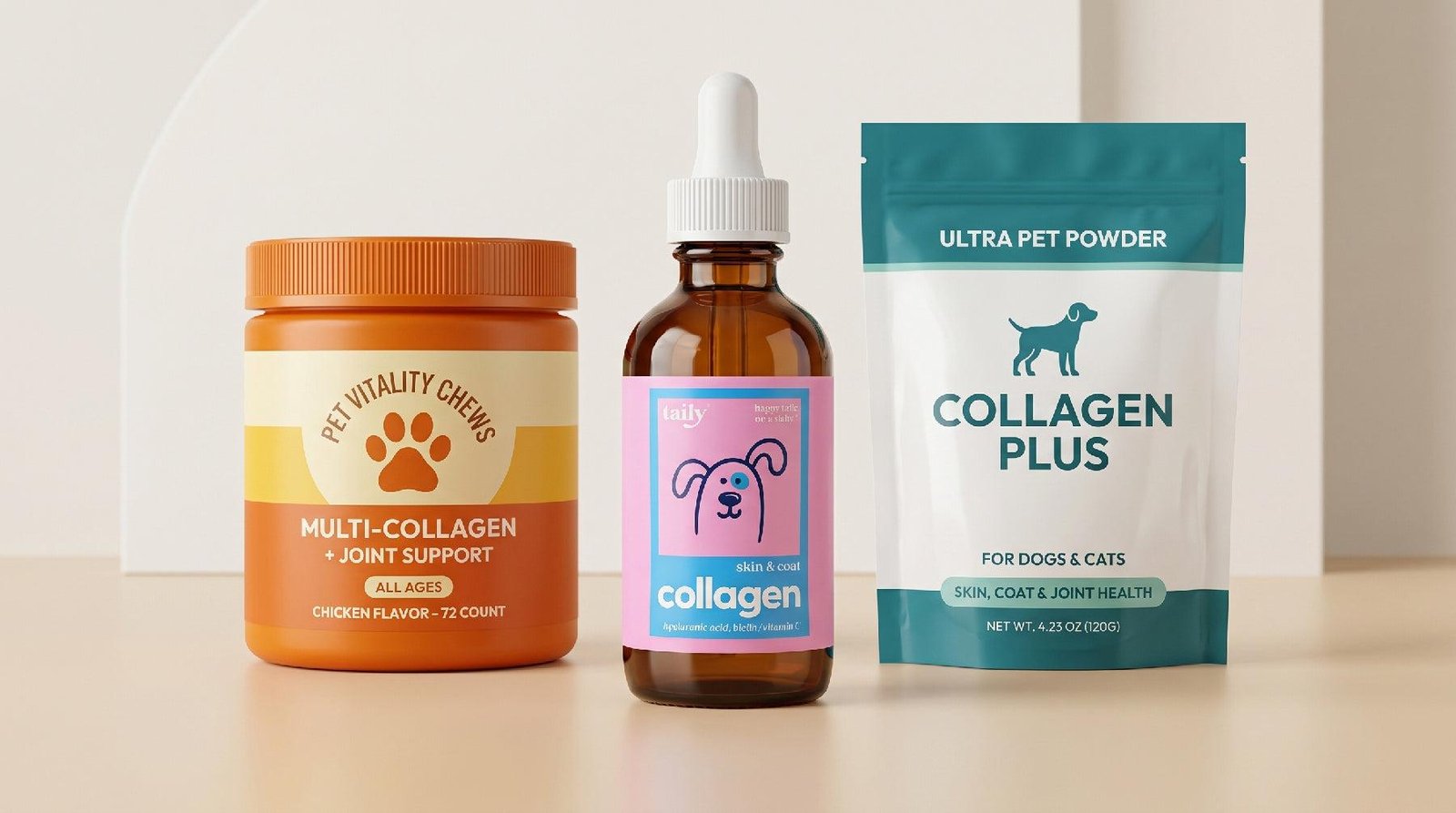
Powders: These can be mixed with regular food and offer flexibility in product positioning and packaging.
Chews and Sticks: Convenient individual servings can make daily use easier for some pet owners. Taste, texture and ingredient stability need to be evaluated.
Tablets: A familiar format that allows brands to develop defined serving sizes, although acceptance may vary between dogs.
Liquid Supplements: These offer another way to deliver ingredients, but formulation stability, packaging compatibility and shelf life require attention.
There is no universally best format. The right choice depends on the intended customer, ingredient characteristics, serving requirements, production process and target price range. For a new private label product, it is worth comparing several formats before deciding which one fits the brand's existing product range.
4. What Does the Scientific Evidence Tell Us?
A popular ingredient is not automatically a proven solution for every intended use. Research on collagen supplementation in dogs has produced different findings.
A 2024 controlled study involving 31 dogs with naturally occurring osteoarthritis reported improvements in certain measured mobility parameters following supplementation with specific bioactive collagen peptides.
However, a randomized, double-blind, placebo-controlled study published in October 2026 evaluated a collagen hydrolysate-enriched diet in dogs with osteoarthritis. The study did not find significant differences between the collagen and placebo groups in the assessed clinical scores or gait measurements after 12 weeks.
These studies examined different collagen preparations and study conditions. Their findings should not be treated as proof that all collagen products produce the same results.
For product developers, this highlights an important principle: ingredient selection and marketing claims should be supported by evidence relevant to the actual formulation. Brands should avoid presenting a nutritional supplement as a treatment or cure for a medical condition without the necessary regulatory authorization.
5. Quality Control and Supplier Evaluation
A product's quality depends on more than the ingredient name printed on its packaging. Before approving a collagen supplement, brands should evaluate both the raw material and the finished product.
Important considerations include:
- Raw material identity, origin and traceability.
- Ingredient specifications and supporting test reports.
- Microbiological quality and relevant contaminant testing.
- Formulation consistency and serving accuracy.
- Taste, texture and product acceptance.
- Stability, packaging compatibility and shelf life.
- Batch records and quality inspection procedures.
The testing requirements should reflect the ingredient, finished formulation and destination market. For example, a powder and a liquid supplement may have different stability and packaging considerations. A chewable product may require additional attention to texture, moisture and ingredient uniformity.
A reliable supplier should be able to explain its quality-control process and provide relevant documentation for the proposed product.
6. Developing a Private Label Collagen Supplement
For brands entering the pet supplement category, product development should begin with a clear target customer and product concept.
Before requesting a quotation, consider the following:
- Target animal: Is the product designed for dogs generally or a
specific customer segment?
- Product positioning: Will the product focus on general
nutritional support, or a more specific nutritional concept supported by suitable evidence?
- Ingredient selection: Which collagen type, source and
specifications are appropriate?
- Product format: Would a powder, chew, tablet or liquid fit the
intended use?
- Packaging: What serving size, package format and branding
approach are required?
- Compliance: Which ingredient, labeling and product requirements
apply in the destination market?
- Production: What are the minimum order quantity, sampling
arrangements and production lead time?
For US-bound products, FDA animal food labeling requirements include proper product identification, net quantity, manufacturer or distributor details and ingredient listing. Claims suggesting that a product cures, treats or prevents disease may cause it to be regulated as a new animal drug.
Other destination markets have their own requirements, so compliance should be reviewed before finalizing the formula and label.
Developing a private label supplement is therefore a coordinated process involving ingredient sourcing, formulation, testing, packaging and market preparation.
Frequently Asked Questions
Is collagen suitable for all dogs?
A product's suitability depends on its ingredients, formulation, serving instructions and the individual animal. Owners should consult a veterinarian when considering supplements for dogs with existing health conditions.
What is the difference between collagen peptides and UC-II?
Hydrolyzed collagen peptides are processed into smaller peptides, while UC-II is undenatured type II collagen. They have different specifications and should not be treated as equivalent ingredients.
Which collagen supplement format is best for dogs?
There is no single best format. Powders, chews, tablets and liquids each have different formulation, storage, serving and acceptance considerations.
What should brands check before choosing a collagen supplement manufacturer?
Brands should review raw material specifications, traceability, quality-control procedures, testing documentation, formulation options, sample availability and the manufacturer's ability to meet destination-market requirements.
Final Thoughts
Collagen is an interesting ingredient opportunity for the growing pet supplement category, but successful product development requires more than following a popular trend.
Brands need to understand the ingredient, evaluate the scientific evidence, select an appropriate product format and establish reliable quality standards.
For businesses considering a new pet supplement range, a well-defined product concept and a capable development partner are important starting points.
At Zhanzheng Pets, we support pet brands, importers and distributors with product sourcing, OEM/ODM coordination and private label development discussions.
Planning a new pet supplement product? Let's discuss your formulation, product format and target market.
Sources and Further Reading
- [PetfoodIndustry -- Report: Pet Supplements Trail Human Wellness
Trends by Seven Years (November 18, 2026)](https://www.petfoodindustry.com/pet-supplements-pro/pet-supplements-and-treats-digest/news/16425222/report-pet-supplements-trail-human-wellness-trends-by-seven-years)
- [La Petite Labs -- Pet Supplement Statistics
2026](https://lapetitelabs.com/pages/pet-supplement-statistics)
- [PubMed -- Placebo-Controlled Clinical Study of Collagen Hydrolysate
in Dogs (October 2026)](https://pubmed.ncbi.nlm.nih.gov/42926012/)
- [PubMed -- Bioactive Collagen Peptides in Canine Osteoarthritis
(2024)](https://pubmed.ncbi.nlm.nih.gov/39298537/)
- [FDA -- Animal Food Labeling and Pet Food
Claims](https://www.fda.gov/animal-veterinary/animal-foods-feeds/animal-food-labeling-and-pet-food-claims)
*This article provides general industry information and is not veterinary or regulatory advice. Product formulations, claims and labeling should be reviewed by qualified professionals for the intended market.*