On This Page ⌄
cover_alt: Small dog in a front carrier backpack during an outdoor outing
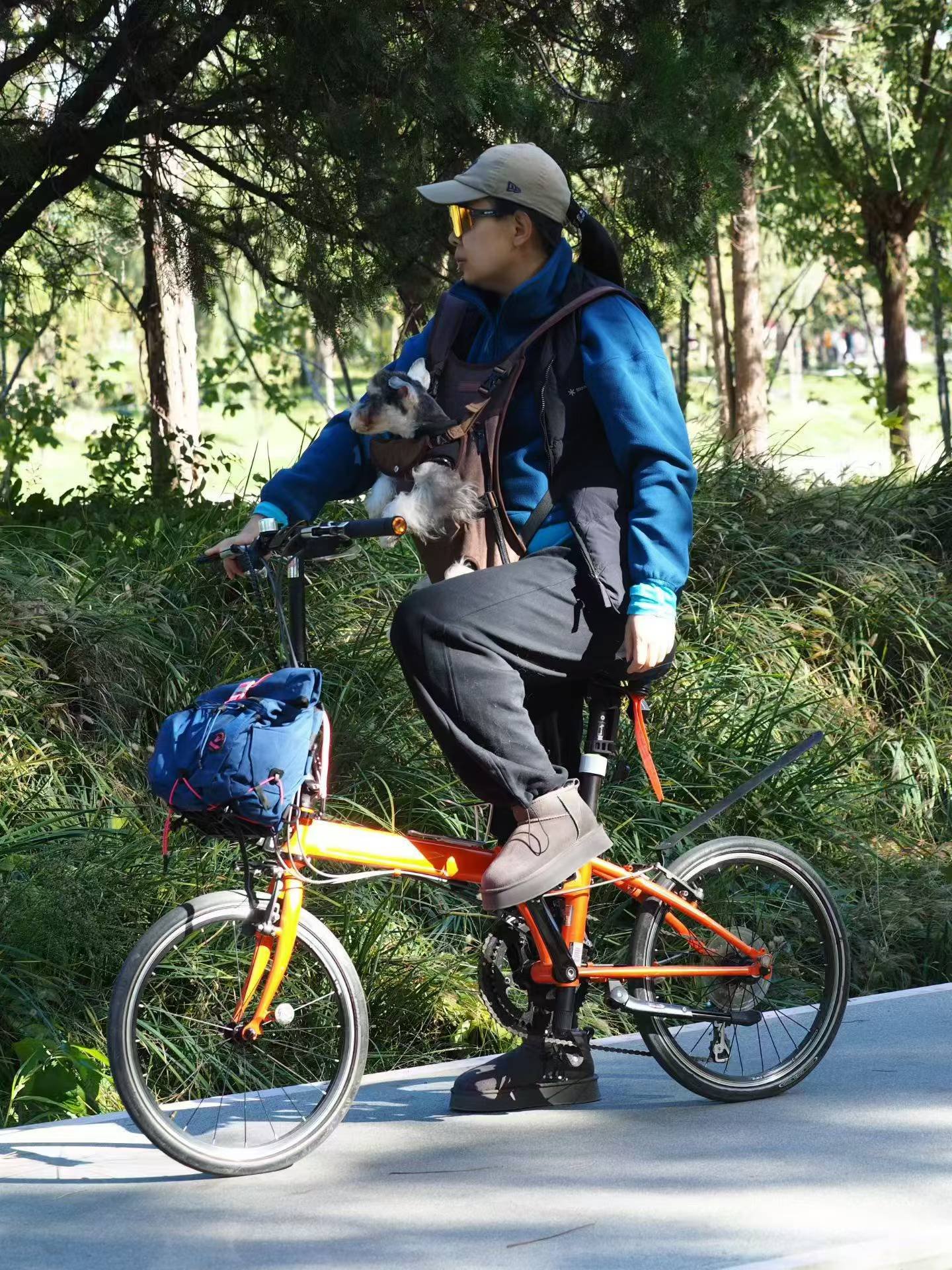
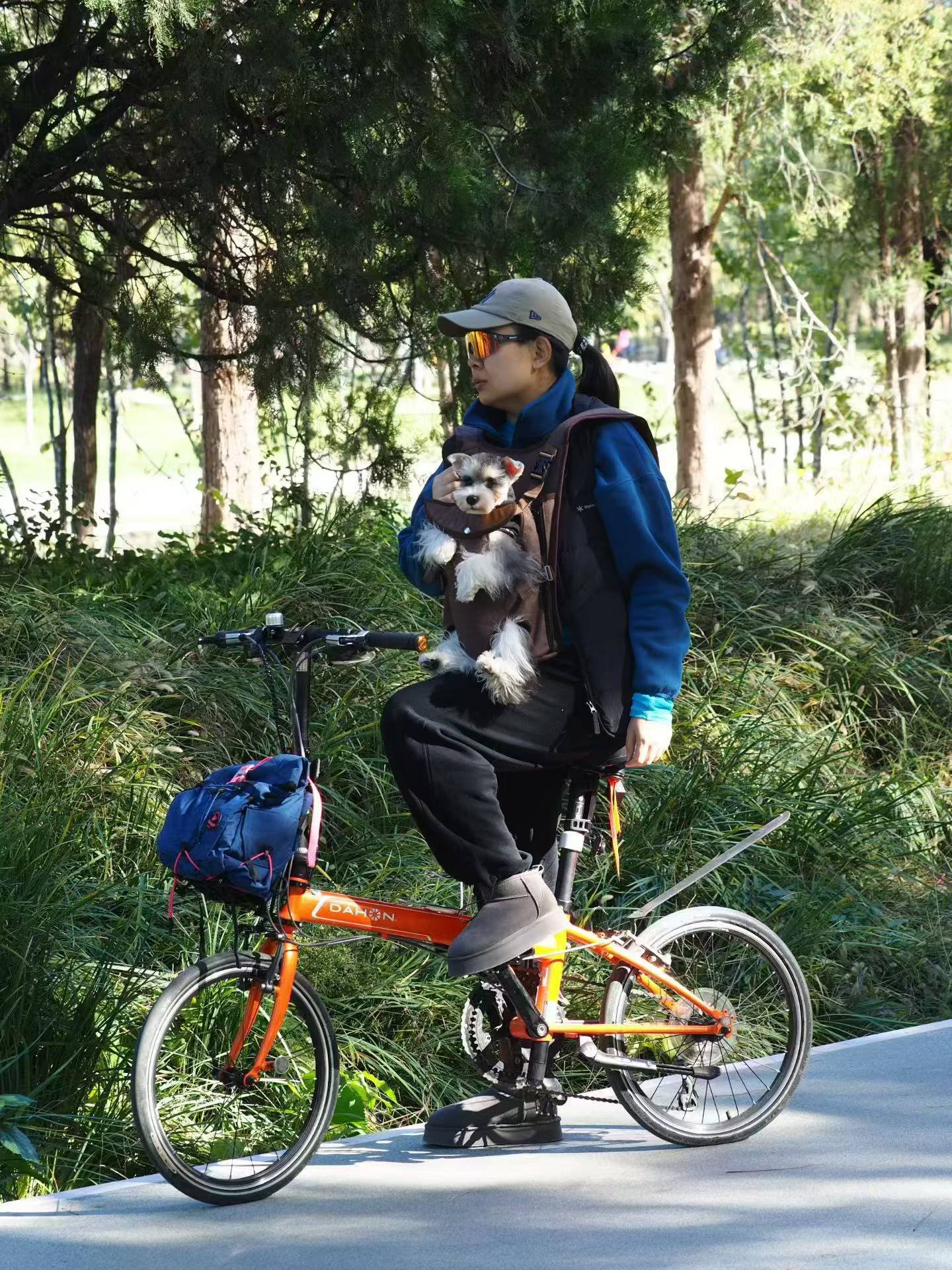
At first glance, these photos show a small dog enjoying an outdoor outing in a front carrier backpack.
The dog sits close to the owner's chest, with its head and front legs outside the carrier. The shoulder straps run over the wearer's shoulders, and the lower part of the bag supports the dog's body.
It looks like a practical way to carry a small dog without holding a traditional pet bag.
But if I were sourcing this type of front dog carrier backpack for a pet brand or retailer, I would want to look beyond the outdoor photos.
A product can look comfortable in one picture without telling us enough about fit, support, construction or how it performs during everyday use.
For a wholesale buyer, those details are worth discussing before choosing a model or approving a sample.
What Makes a Front Dog Carrier Different?
A front dog carrier positions the pet against the owner's chest rather than inside a conventional enclosed travel bag.
Some designs allow the dog's head and legs to remain outside, while others provide a more enclosed carrying space.
This makes the front carrier different from a standard dog carrier backpack worn on the back.
The owner can see the dog more easily, and the pet remains close to the person's body.
That may appeal to customers looking for a hands-free dog carrier for short walks, outdoor visits or everyday outings.
However, not all front pet carriers have the same structure.
The way the dog's body is supported, the location of the leg openings and the adjustment range can vary between models.
This is why I would start with the actual design instead of relying on the product name alone.
The Dog's Position Matters More Than the Photo
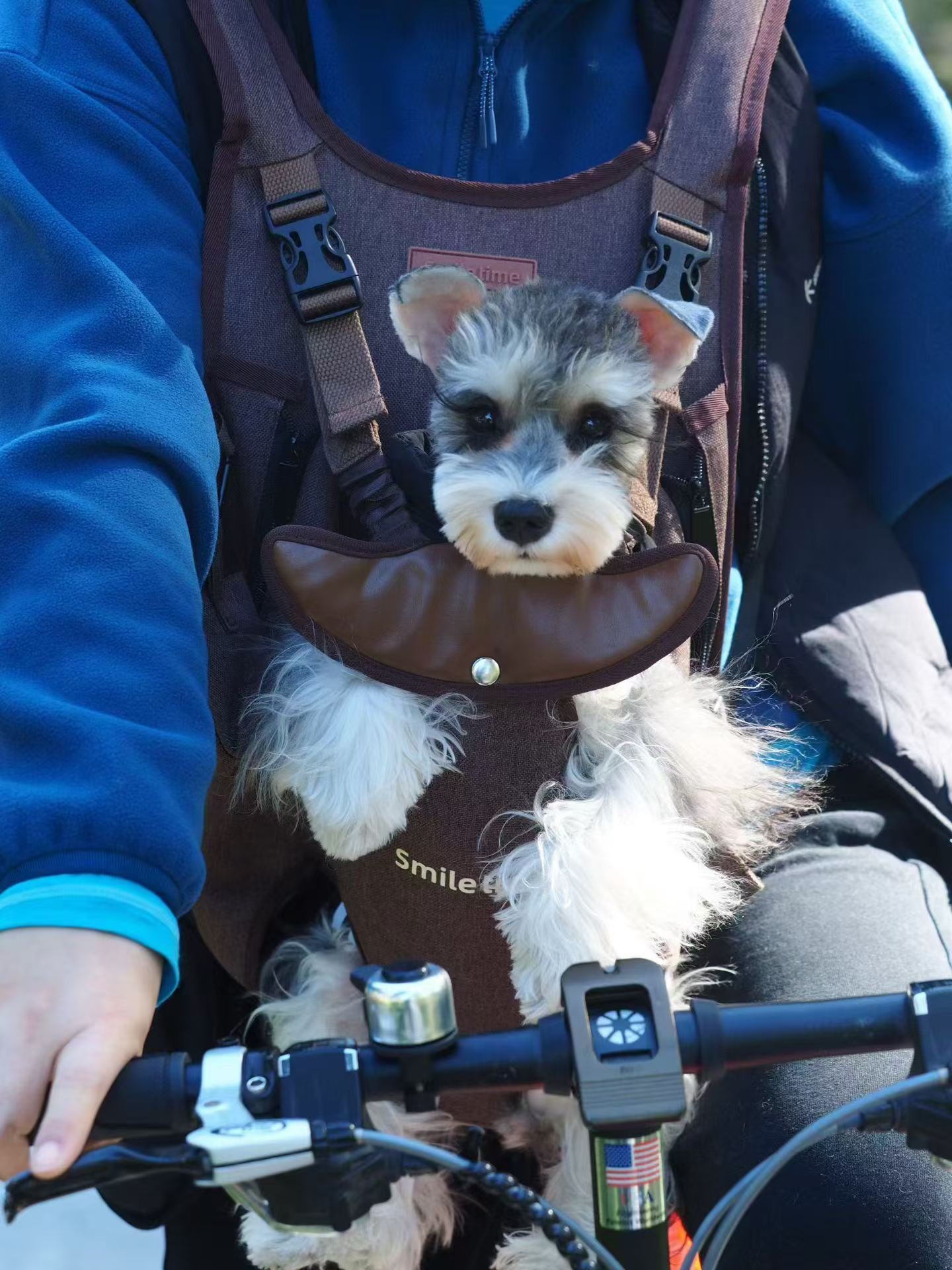
One of the first things I notice in these photos is how the dog sits inside the carrier.
Its upper body remains visible, while the lower section of the carrier supports the rest of its body.
That gives a useful view of the product's intended carrying position.
But a photograph cannot tell us whether the carrier fits every dog of a similar size.
For an open-leg dog carrier, I would want to check the shape of the openings, the pressure around the dog's chest and abdomen, and whether the carrier provides suitable support without forcing an uncomfortable posture.
I would also want to see how the dog responds when the wearer starts walking.
Does the carrier shift significantly? Can the dog remain comfortably supported? Do the openings rub against the dog's legs?
These observations are more useful than judging the product only by how it looks on a model.
A dog should not be forced to remain in a carrier that causes discomfort or restricts normal breathing.
Different dogs may also respond differently to the same design, even when their body weights are similar.
Size Selection Is More Than a Weight Limit
Many pet carriers are marketed using simple weight ranges.
For example, a supplier may provide small, medium and large versions with different recommended pet weights.
That information is useful, but it is not enough on its own.
Two dogs with the same weight can have different chest measurements, body lengths and leg proportions.
For a small dog carrier backpack, those differences can affect how the pet fits inside the carrier.
Before placing a wholesale order, I would ask the supplier for a complete size chart.
The measurements should clearly explain which dimensions refer to the pet and which refer to the carrier.
If possible, sample fitting should be checked with dogs representing different body shapes within the stated size range.
For a brand selling online, an accurate size guide can be especially important.
If customers select a size based only on a weight recommendation, they may receive a carrier that does not fit as expected.
That creates a problem for both the customer and the retailer.
Shoulder Straps, Buckles and Stitching Deserve Attention
The next detail I would check is the carrying system.
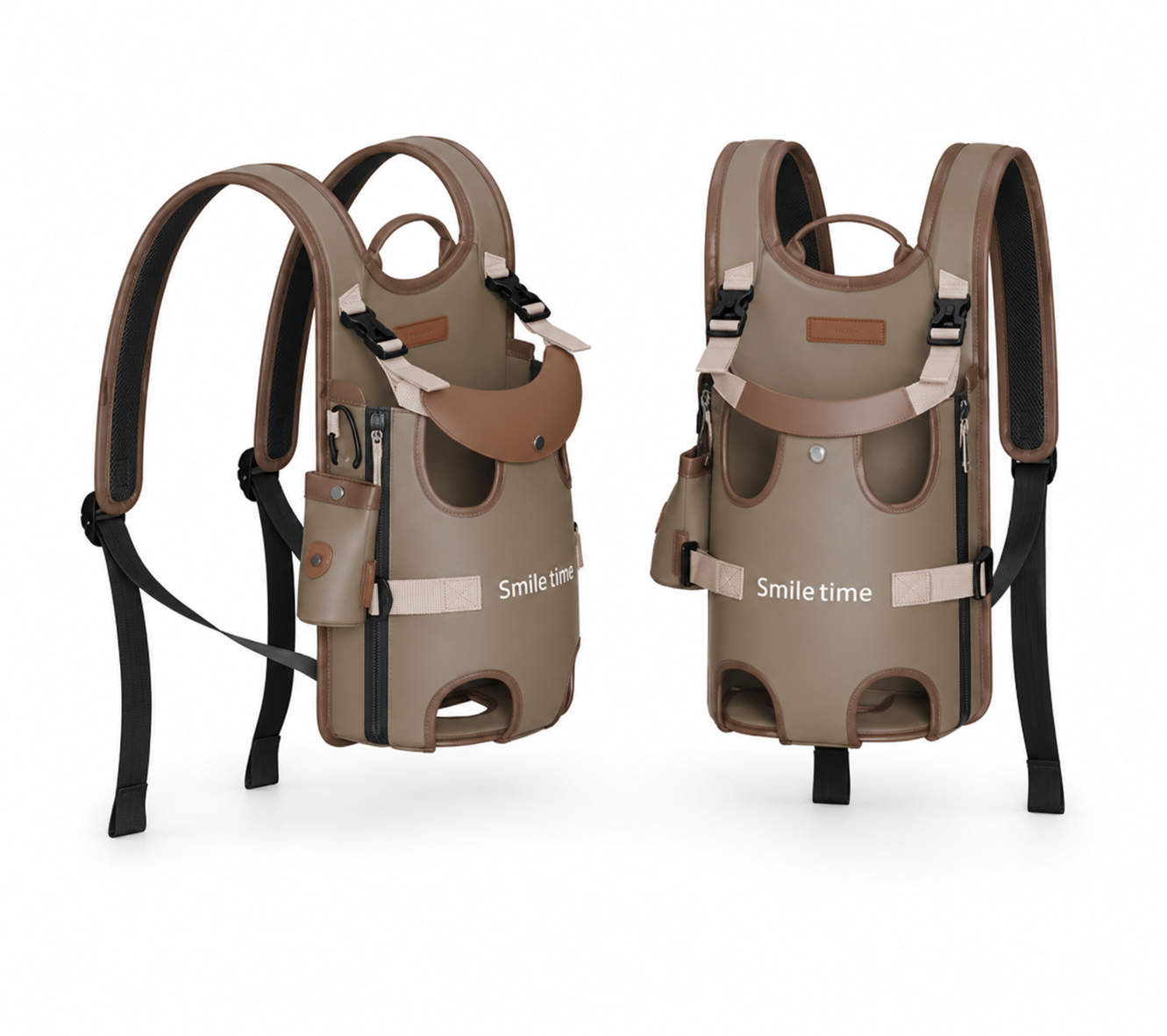
These photos show shoulder straps and plastic adjustment hardware.
That gives an indication of how the carrier is worn, but it does not establish the strength of those components.
For a buyer evaluating a hands-free dog carrier, several construction details deserve closer inspection.
The shoulder straps should be evaluated for adjustment range, comfort and their ability to maintain the intended fit.
Buckles should engage securely and operate consistently.
The stitching around load-bearing connections should be checked carefully, particularly where the straps attach to the carrier body.
I would also want to understand whether the carrier includes an internal retention strap and, if it does, how it is intended to connect to an appropriate pet harness.
These details should be confirmed on the actual sample.
A useful evaluation should consider the complete carrying system, not just the fabric or the outside appearance.
For bulk production, the approved sample should establish clear requirements for materials, buckles, stitching and component construction.
Outdoor Photos Do Not Automatically Mean Cycling Safety
The bicycle in these photos helps communicate an outdoor lifestyle.
But it also raises an important distinction.
A photograph of someone wearing a dog carrier while seated on a bicycle does not prove that the carrier is suitable for cycling.
Riding introduces movement, changes in balance and potential risks that are different from ordinary walking.
A buyer should therefore avoid advertising a front dog carrier as a cycling-safe product unless the manufacturer has provided appropriate evidence for that specific intended use.
The same principle applies to hiking, running or other activities.
A carrier may be useful for one type of outing without being suitable for every outdoor activity.
For brands and distributors, marketing claims should match the product's verified specifications and instructions.
That protects customers from unrealistic expectations and helps reduce avoidable after-sales disputes.
What About Fabric, Cleaning and Everyday Maintenance?
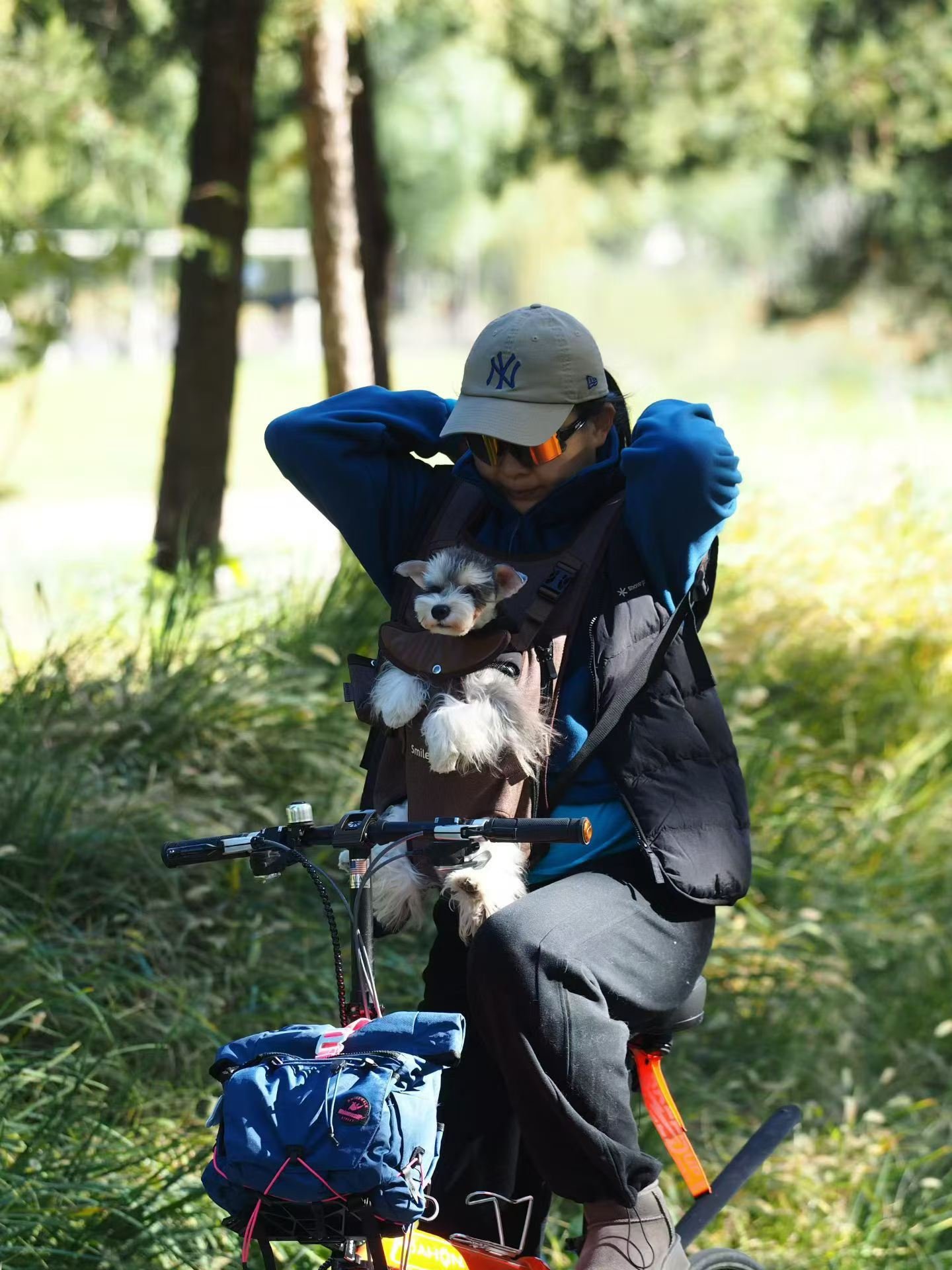
A front pet carrier is likely to come into contact with pet hair, dirt and moisture during normal use.
For that reason, material selection and maintenance instructions are part of the purchasing decision.
I would ask what fabric is used for the carrier body and whether the lining and contact surfaces can be cleaned conveniently.
If the supplier describes the material as breathable, water-resistant or machine-washable, those claims should be supported by the actual product specification.
The cleaning method also needs to account for buckles, straps and any internal structural components.
For a private-label product, care instructions should be included in the information provided to the final customer.
This may seem like a small detail during product selection, but customers often notice these things after several weeks of use.
What Should a Pet Brand Check Before OEM Production?
For a pet brand considering a private label dog carrier backpack, I would begin with the existing model and its confirmed specifications.
The first questions would concern sizing, material, colour options, component construction and the intended carrying position.
After that, we could discuss branding and packaging.
Logo placement may look simple, but the chosen position should not interfere with straps, buckles or the areas that contact the dog.
A different fabric or decorative trim may also affect how the finished product looks and performs.
When requesting an OEM quotation, I would confirm the estimated order quantity, size and colour combination, packaging requirements and destination market.
For example, three sizes across four colours would create twelve combinations before considering any other variations.
That can make a difference to stock planning, minimum order quantities and how a brand introduces the product range.
For a first order, choosing a smaller assortment may help reduce unnecessary complexity.
The best option depends on the brand's existing sales channels and customer demand.
What Can a Sample Tell You That a Catalogue Cannot?
Catalogue photos are useful for introducing a product.
They show the style, approximate shape and carrying arrangement.
But they cannot replace a physical sample.
With a front dog carrier, I would want to examine the product from several angles, inspect the stitching and hardware, and check how it adjusts on different wearers.
I would also want to see appropriate fit evaluations with dogs within the intended size range.
Where the supplier makes claims about carrying capacity or specific outdoor uses, those claims should be supported by suitable documentation and testing.
If the sample reveals pressure points, awkward adjustment or difficulty placing the dog into the carrier, those issues should be discussed before the bulk order.
The objective is not simply to approve how the product looks.
It is to establish a specification that can be reproduced consistently during production.
A Good Product Photo Should Start a Better Purchasing Conversation
These outdoor photos are useful because they show a real carrying position rather than only a product against a white background.
We can see the overall style, how the carrier is worn and how the dog sits inside it.
That is valuable information for a potential buyer.
But there is still more to confirm before sourcing the product for a retail collection.
Fit, body support, strap construction, sizing, cleaning instructions and appropriate use all deserve attention.
For pet brands and distributors, a front dog carrier backpack should be evaluated as a complete product, not simply as an attractive outdoor accessory.
At Zhanzheng Pets, we work with international pet brands, importers and retailers on pet carrier sourcing, private-label customization and OEM/ODM projects.
If you are developing a range of dog carrier backpacks, share your target market, preferred carrying style, size requirements and estimated order quantity.
We can discuss suitable products, sample evaluation and customization options before bulk production.
Explore our Pet Carriers & Travel Bags or contact Zhanzheng Pets to discuss your sourcing project.