On This Page ⌄
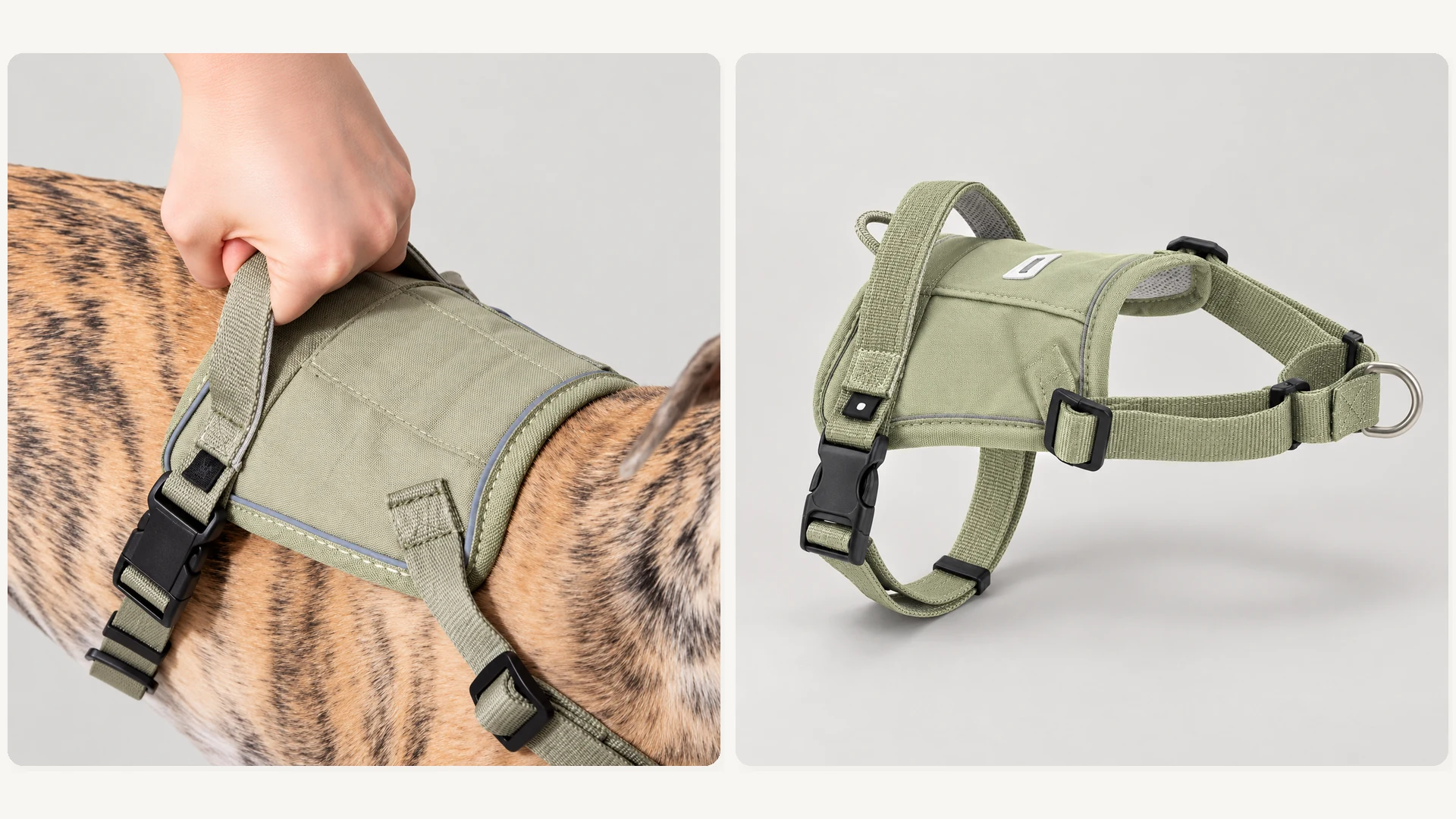
Look at these two photos of a padded dog harness.
In one, the harness is being worn by a dog, with someone holding the handle on its back. In the other, the harness sits on its own, showing the straps, buckles and overall construction.
They're different ways of looking at the same kind of product.
The first photo helps us imagine how the harness is used. The second gives us a clearer look at how it's put together.
But neither photo tells us everything.
For a pet owner, that might mean wondering whether the harness will fit comfortably. For a pet brand or distributor, it raises a different set of questions about materials, construction, sizing and product consistency.
That's where a closer look becomes useful.
The Difference Between Seeing a Harness and Seeing It Worn
A product photo on a white background is useful for comparing colours and designs. It allows buyers to examine the shape without distractions.
But a harness changes appearance when it's placed on a dog.
The straps curve around the body. The padded section rests against the back, and the adjustment points sit at different angles.
Something that looks well proportioned in a studio photograph may fit differently depending on the dog's body shape.
In the first image, the olive-green harness has a broad padded back section, visible stitching, adjustable straps and a top handle. These details are easy to identify.
What we cannot determine from the photo is how the harness behaves when the dog walks, turns or pulls against the leash.
Does the back panel remain in position? Do the straps move towards the front legs? Is there enough adjustment for dogs with different chest proportions?
Those are questions that require fitting and movement checks.
For brands developing a harness collection, one attractive product photograph should not replace a clear size chart and physical sample evaluation.
The Handle Deserves a Closer Look
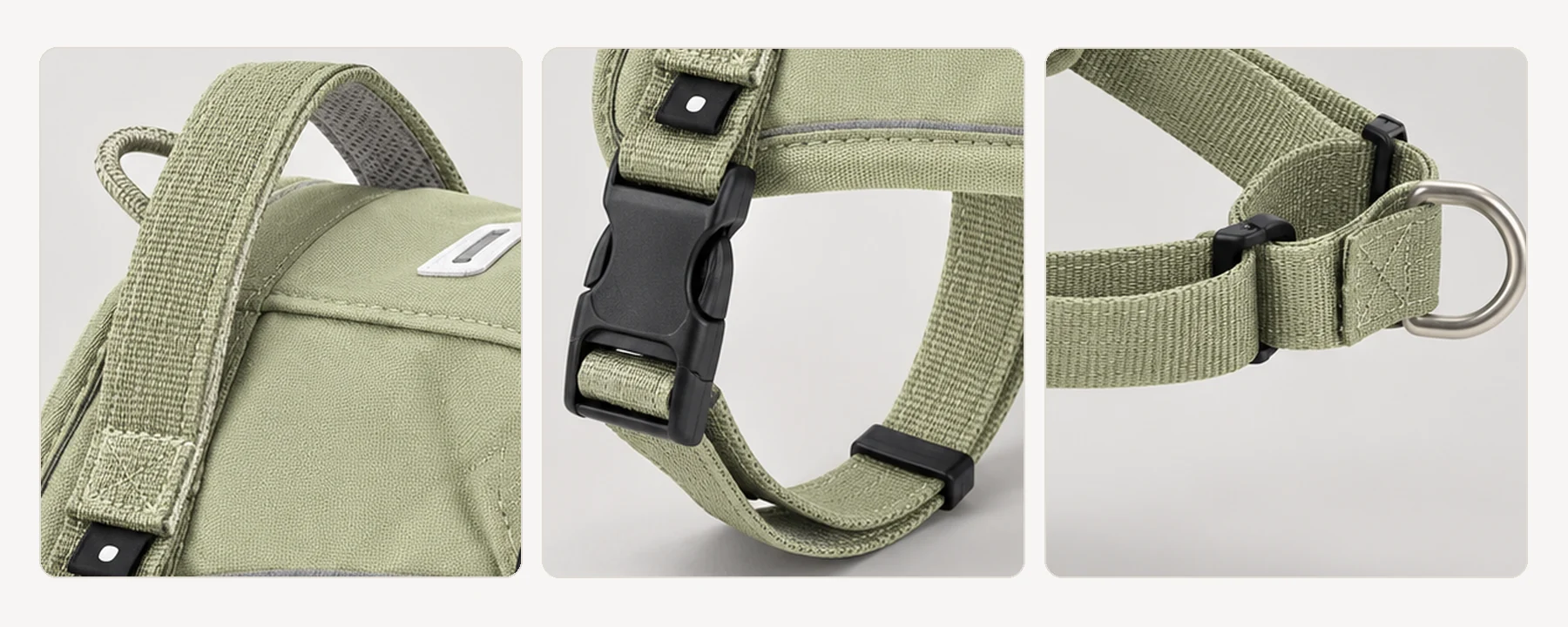
The handle is probably the first feature that catches my attention in the wearing photo.
It looks convenient. A person can hold it without reaching underneath the dog, and it may provide additional control in certain situations.
But a handle also creates a point where force can be applied to the product.
When evaluating this design, I would want to examine how the handle is connected to the padded section.
Is it secured through reinforced webbing? How are the stitches arranged? Does the connection remain stable when force is applied within the product's intended use?
The handle material matters too. A narrow, stiff handle may feel different from a wider, softer one when held.
The photo can show where the handle is positioned, but it cannot establish its strength or long-term durability.
For wholesale buyers, this is an important distinction.
A handle should not be advertised as suitable for lifting or carrying a dog unless the product has been specifically designed, tested and rated for that purpose.
The relevant requirements should be confirmed with the supplier before including such claims in product descriptions.
What the Studio Photo Reveals
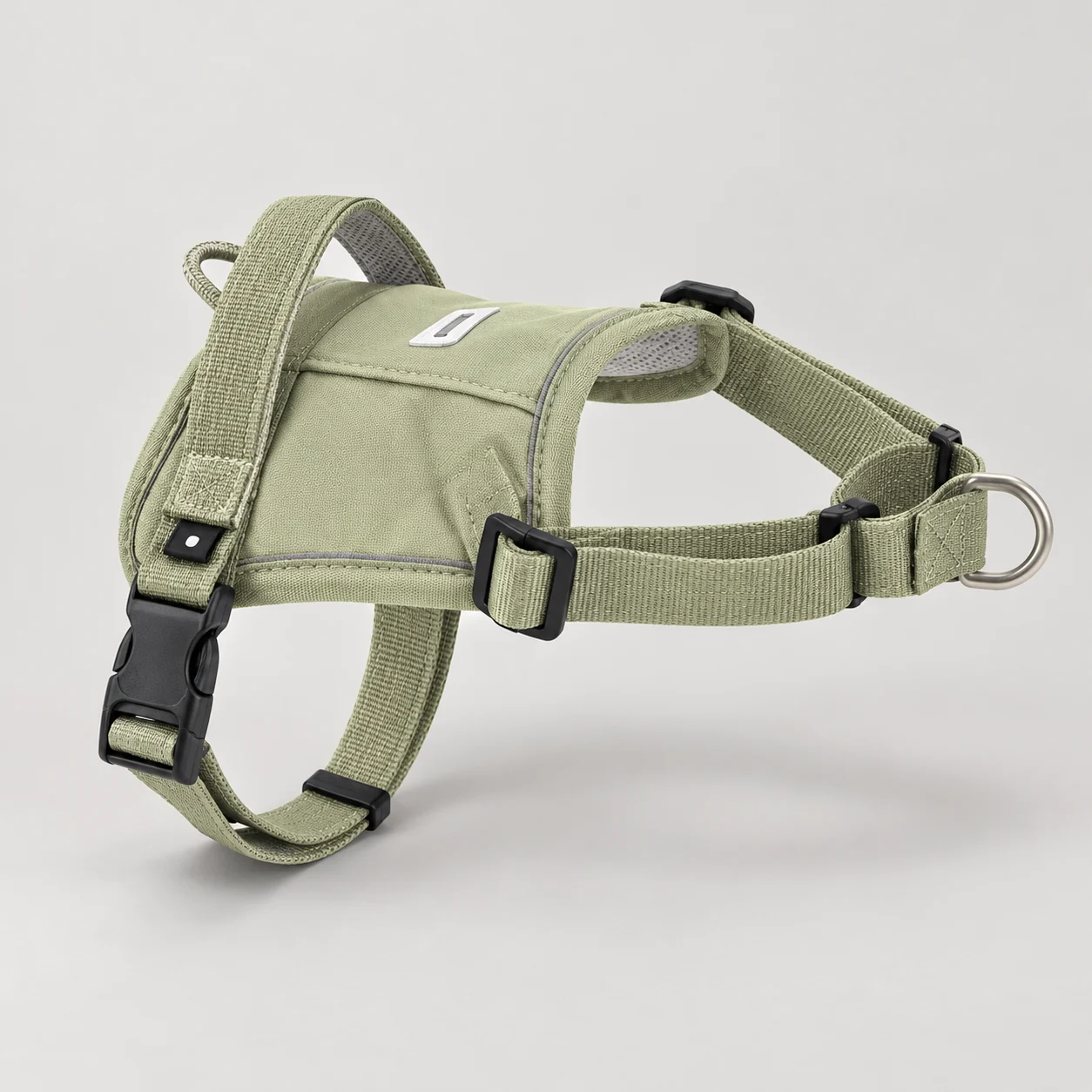
Now consider the second image.
Without the dog, the harness construction becomes easier to examine.
We can see the broad back panel, the webbing straps, adjustment hardware, quick-release buckle and metal leash attachment ring.
These components may look ordinary, but each contributes to the finished product.
The webbing needs to work with the adjustment hardware. The buckle should fasten and release properly while remaining secure during its intended use.
The metal connection ring needs to be appropriately specified and attached to the harness structure.
And the stitching needs to be consistent, particularly where straps and hardware connect.
The image also shows a fabric panel with a contrasting inner surface.
It may appear soft and breathable, but a photograph alone cannot confirm the precise material, thickness or comfort characteristics.
Those details should be checked against the supplier's specifications and an actual sample.
Two padded dog harnesses can have similar silhouettes while using different fabrics, webbing, hardware and construction methods.
This is one reason I would not compare quotations based only on product photographs.
A Small Change Can Affect the Whole Product
Imagine a pet brand likes this harness design but wants to develop its own version.
The first request might be straightforward: keep the shape, change the colour and add a logo.
But even a small design change can lead to other decisions.
If the brand changes the outer fabric, will it affect the thickness or flexibility of the padded panel?
If the webbing width changes, will the existing adjustment buckles still be suitable?
If a logo is placed on the back panel, will it interfere with the stitching or handle position?
These questions are not necessarily problems. They are part of product development.
The same applies to sizing. A harness offered in several sizes needs more than labels such as S, M and L. Each size should have defined measurements, adjustment ranges and appropriate component specifications.
For a private-label project, I would rather clarify these points before sampling than discover later that the approved appearance does not match the intended fit or construction.
Good communication at this stage can reduce unnecessary revisions.
For brands developing a custom dog harness, the challenge is not simply choosing the right colour or logo. It's making sure the materials, sizing and construction remain consistent with the approved sample.
What a Padded Dog Harness Sample Can Reveal
Once a physical sample arrives, the evaluation becomes more practical.
You can feel the fabric and padding. You can adjust the straps, operate the buckle and examine the stitching closely.
You can also check whether the dimensions match the approved size chart.
A proper fitting evaluation adds another layer of information.
The harness should be assessed on dogs within its intended size range, including how it sits when the dog is standing and moving.
Special attention should be given to areas around the shoulders, chest and front legs.
The aim is not simply to confirm that the harness can be fastened.
It is to understand whether the design fits as intended and whether anything needs to be adjusted before production.
If a buyer discovers a problem, it is useful to record the details clearly.
A photograph showing where a strap sits incorrectly, together with the dog's relevant measurements and the sample size, can be more helpful to the supplier than a general comment such as "the fit is not good."
This gives both sides something specific to work on.
Why This Matters for Pet Brands
A dog harness is not usually a product that customers judge by appearance alone.
They also care about how it fits, whether it is easy to use and how it feels during everyday walks.
For online pet brands, the product page needs to communicate these details clearly.
A good product listing might include a studio image, a wearing photo, a size guide and close-up views of the buckle, handle and leash connection.
A short fitting demonstration can also help customers understand how the harness should be adjusted.
For importers and distributors, the same information helps when communicating with retailers and reviewing new product ranges.
And when developing a private-label dog harness, it makes sense to confirm the specifications before moving on to colours, logos and packaging.
At that point, a reference image becomes a starting point for development rather than the complete product specification.
One Product, Two Photos, More Questions Worth Asking
The two images show different sides of a padded dog harness.
One helps us understand how the product looks on a dog. The other makes its construction easier to examine.
Together, they provide a better starting point than either image alone.
But the most important decisions still depend on information a photograph cannot provide: measurements, material specifications, hardware quality, fitting results and sample performance.
For pet brands, that is worth remembering when evaluating new products.
The goal is not simply to find a harness that looks good in a catalogue. It is to choose a design that can be specified clearly, evaluated properly and produced consistently.
At Zhanzheng Pets, we work with international pet brands, importers and distributors on pet product sourcing and OEM/ODM customization projects.
If you are developing a private-label dog harness collection, you can share your reference images, preferred materials, sizing requirements and estimated order quantity with our team.
We can discuss the product details and potential sourcing options before moving towards sampling.
Explore our Dog Harness Collection to see more styles and available customization options.